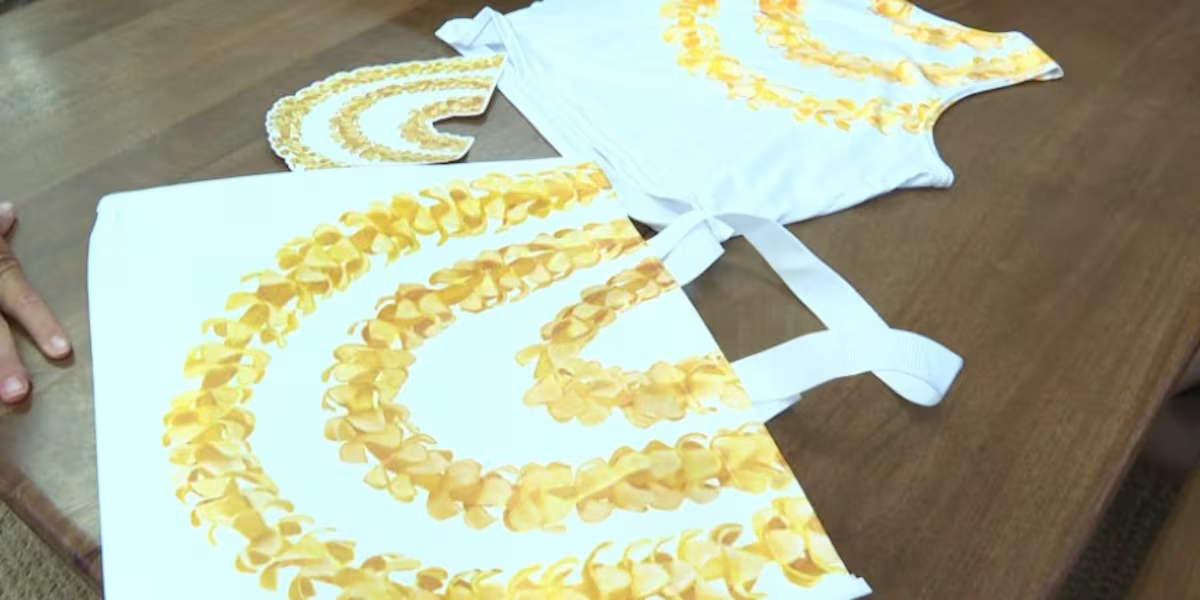
Buyers beware: Copyright concerns on the rise for Hawaii artists
HONOLULU (HawaiiNewsNow) – Hawaii artists are calling out retail websites that are using their work without prior approval. Through this, they also hope consumers will pay more attention to where their products are coming from.
Read more Holy Ghost Feast celebrates 133 years on Maui
“Thankfully I have customers who will send me a screenshot and they be like, ‘Hey sis, isn’t this your stuff?’” JT Ojerio, artist and founder of the brand Aloha De Mele, said.
Oftentimes, she and other artists will find their designs on sites like Temu and Alibaba printed on blankets, shower curtains, pillows, and even sold as templates for others to use — all without their approval.
“I think it’s gotten worse recently. I hate to say it, but the brand Hawaii is very marketable and it’s kind of scary. I mean, I’ll go on Temu and I’ll go on Alibaba and I’ll type in Hawaiian lei and I’m just so scared to see what pops up,” Ojerio said.
She has fallen victim to copyright infringement before, and also alerts other artists when she suspects their work is being ripped off too.
“They’re never happy and … they try to joke, ‘Oh, it’s a rite of passage,’ but it really sucks. We put so much work into it and you know we always go in with intention,” she said.
Ojerio encourages other artists to copyright their works, and report unauthorized products to the websites and platforms advertising them.
Read more Murder trial begins for Larry Millete in death of Radford grad Maya Millete
In a statement, a company spokesperson said:
“Temu does not allow the use of unauthorised [sic] intellectual property on our platform. Listings that violate these standards are promptly removed, and enforcement actions are taken against the responsible sellers.”
The statement continued, “To protect rights holders, we employ a combination of automated detection and manual review systems, currently scanning over 38 million images and more than nine million keywords.”
Temu confirmed that for two artists we pointed out to them, product listings were reviewed, removed, and their artwork was added to an IP protection database.
Ojerio said in her experience, making a copyright claim on Temu has been easier than getting pieces removed from Alibaba. In the end, Ojerio hopes consumers will be more mindful of the sellers they’re buying from.
“We love as a community love supporting local. So even if it just takes a few minutes or seconds to do your homework of where this is coming from, that would really help a lot of small businesses in the long run,” Ojerio said.
Alibaba did not respond to our request for comment, but Ojerio described some of the past challenges she’s faced with them, regarding international copyright laws, which can be complicated and costly.
Read more Crisis teams use new law to get mentally ill homeless into treatment on Oahu




Post Comment