Crisis teams use new law to get mentally ill homeless into treatment on Oahu
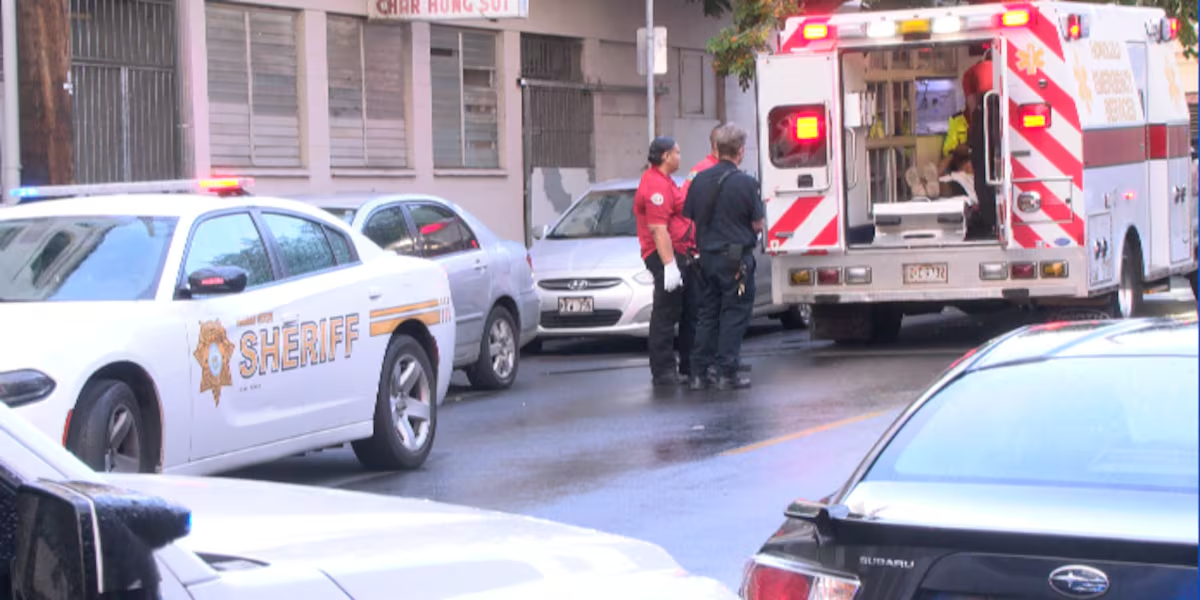
HONOLULU (HawaiiNewsNow) – Crisis teams backed by law enforcement are removing mentally ill homeless individuals from Oahu streets and taking them to health facilities for evaluation rather than jail.
Read more City to begin Kuhio Ave. road rehabilitation
The pilot program, MH-3, started in January.
About 60 people from across the island have been taken to hospitals or mental health crisis centers. Of those, six would not go willingly and had to be handcuffed and driven in patrol cars to the treatment facility.
None had to be wrestled to the ground or physically forced.
Program backed by new legislation
Honolulu Emergency Medical Services’ CORE unit – the Crisis Outreach Response & Engagement team – previously tried to get people suffering from severe mental distress into facilities, but many refused.
CORE now teams up with law enforcement three times a week for compelled care, backed by legislation that passed last year.
“They’re not in trouble. They didn’t break the law. But because they are a danger to themselves or others, they can be involuntarily taken, either in the ambulance or the squad car, to a facility to get an emergency evaluation,” said Dr. James Ireland, director of Honolulu Emergency Services.
CORE and sheriff’s deputies worked in Chinatown the day HNN Investigates caught up with them. We saw people talking to buildings, some making obscene gestures or doing obscene things as customers at the lei shops walked by and diners tried to enjoy meals at restaurant patios.
One man had his pants nearly to his thighs. Sam Say, owner of M.P. Lei shop said that man has done that in front of children before. Say also said the man uses their parking lot as a toilet and Say starts most mornings cleaning that up.
“Terrible because nobody want to touch his do poo-poo every day,” he said.
A background check showed the man had a criminal record that includes sex assault and robbery. CORE took him to the Behavioral Health Crisis Center with deputies following.
Ireland said many of the people transported need medication, “One of the problems with mental illness is patients don’t have insight. They don’t have insight onto their condition,” he explained.
Read more Preparations underway ahead of annual Memorial Day ceremony
Another woman, barefoot and hungry, was digging through trash bins and walking through traffic.
“Some pull at your heartstrings. You feel sad for certain types of people,” said Chuck Bussler of Fete restaurant, which has a James Beard award-winning chef. The patio is often used by patrons.
One-third remain off streets
City council member Tyler Dos Santos-Tam, who represents Chinatown, was with state Senate candidate Tricia Nakamatsu, talking with business owners. They were able to see the MH-3 program in action.
“The folks who are willing to accept help, they’ve gotten help. They’ve gotten those social services. They’ve gotten the support they need. The ones that remain out on the street are the really difficult cases. And those are the ones that need these kinds of interventions,” Dos Santos-Tam said.
Nakamatsu said the program addresses a humanitarian need.
“When you see the conditions that they’re living in, I think it becomes pretty apparent that the humane thing to do is to get them help,” she said.
Of the 60 people island-wide transported through the MH-3 program so far this year, one-third remain off the streets in the Aala or Leahi respite centers or in transitional housing getting treatment.
The pilot program is set to expand this summer to five days a week.
Currently, sheriff’s deputies get overtime to do the work, but changes could be ahead when the pilot program becomes a permanent one.
Read more Aaron Rodgers agrees to a 1-year deal to return to the Pittsburgh Steelers, AP sources say




Post Comment