‘We felt hollow’: Otake Camp flood survivors urge preparedness
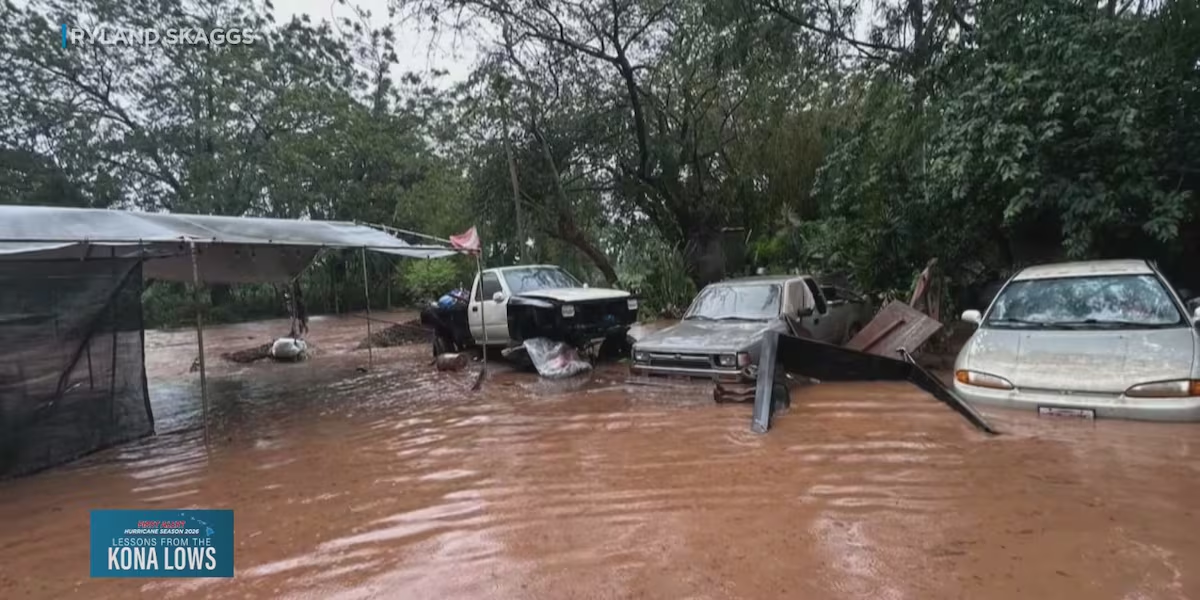
WAIALUA (HawaiiNewsNow) – Amid the roaring, rushing sounds of heavy rain, those caught in the path of the historic Kona low floods in March were forced to abruptly flee their homes.
Read more Maui Gold debuts new brand in celebration of pineapple week
For the survivors, the terrifying sounds of that night will never leave them.
“All I could hear was metal screeching against one another, trees shaking, branches breaking, the rain falling, thunder,” recalled Kaleo Cyprian Valmoja-Galbiso, Otake Camp resident and flood survivor.
MORE: First Alert Hurricane Season 2026: Lessons from the Kona lows
At Otake Camp in Waialua, residents said facing a wall of water made survival nothing short of a miracle.
“All we could hear is each other’s screams and cries out of fear, because we didn’t know what was going to happen to us,” Valmoja-Galbiso said.
“When the water comes, it comes with force,” added Ryland Skaggs, Valmoja-Galbiso’s mother and Otake Camp resident.
“They’re trying to wake up people when this is happening, and you can imagine what these guys are going through. I got goose bumps telling you this,” said Marck Aphay, Otake Camp resident and flood survivor.
A night of rapid flooding and evacuation
More than 5,500 North Shore residents were evacuated as the severely saturated ground simply couldn’t bear another drop.
Mount Kaala received a staggering 22 inches of rain, acting as a giant funnel that dumped high-velocity runoff directly into the basins below.
“It was 11:30 at night. We were already on flood watch due to the prior flooding that’s been happening,” Valmoja-Galbiso said.
Skaggs and her sons, Kaleo and Sage, have lived at Otake Camp for nearly 20 years. Her sons know the drill: watch the Kaukonahua Stream when heavy rains race down.
“Sage, he woke me up (and said) ‘Mom, the water level is at the berm.’ I told them both, we got to go now,” she recalled.
Over the rushing sounds of the swelling river, they scrambled into the dark to wake their most vulnerable neighbors.
“We walked out with whatever we had, whether some of us had shoes and others walked out barefoot,” Valmoja-Galbiso said.
“I told the boys, go back and go pound on the walls,” Skaggs said.
Evacuating required sheer physical willpower against the deluge.
“We had to dig our feet into the ground and pull ourselves against the current, and we had to carry the kids above our heads in their diapers and stay as a group as we exited. By that time, that is when the first responders showed up,” Valmoja-Galbiso said.
Floodwaters rise past 6 feet
By the time help arrived, the raging flood waters had surpassed six feet, filling homes inside and out.
“At the peak of the flooding when we were evacuating everybody… I’m 5′11” and the water was up to my shoulders. So you can already tell, compared to my mom, she would have been completely submerged,” Valmoja-Galbiso said.
The devastation at Otake Camp served as a reminder for the rest of Hawaii that disaster doesn’t always wait for sirens.
“Sirens didn’t go off here that night. But those first responders are so busy, I guarantee they had about a hundred million calls coming in,” Aphay said.
The scale of the disaster — and what was lost
In a recent University of Hawai‘i study, researchers found that two trillion gallons of water flooded the islands during the event — enough to fill three million Olympic-sized swimming pools.
Three Otake Camp plantation houses were ripped from their foundations and carried down the river, displacing six families.
Aphay was working late when he got a frantic phone call from his brother.
“He said, ‘Hey, ours went down. Auntie Ry’s went down. Yours went down… Yours hit the bridge,’” Aphay said. “I said, ‘Nah, no way.’ … He was just happy in my state to hear my voice, because I am alive.”
The water washed away decades of memories in a matter of minutes, survivors said.
Read more Kaimana Beach fully reopens after monk seal pup relocated
Valmoja-Galbiso said, “At that point, we hit rock bottom, because all of our valuables, all of our mementos and our memories of our loved ones, our photos of childhoods, everything that we had went. We felt hollow.”
Gratitude amid the ruins
Despite the destruction, survivors said they are grateful no lives were lost.
“You’re not thinking what to grab. You’re thinking who to grab,” Aphay said.
“We got everybody out safe,” Skaggs said.
“The final head count was a relief, but I still had that anxious pit in my stomach making sure,” Valmoja-Galbiso added.
Look closely at the earth where these homes once stood, and fragments of families’ lives still stick out of the mud: a warped ukulele, scattered crystals, old CDs. Inside one remaining structure, toys sit frozen in time, exactly where the receding waters dropped them.
The land holds memories built over decades — homes once filled with laughter and warmth from family gatherings, celebrations, and everyday life together.
Pointing to a blank space of dirt, Valmoja-Galbiso gestured, “This would be my backyard.”
Displaced residents adjust; volunteers step in
For others, life has drastically downsized. Opening the doors of a repurposed food truck outfitted with a bed, Aphay shared his new reality.
“Basically, this is where I’m staying. So this bus was donated to me to use from Auntie Jen. I’ve been in here for about two months. This is enough for me right now,” Aphay said.
While living in the donated food truck, Aphay spends his days rebuilding what he can. American Red Cross signs are taped onto homes, marking the disaster zone and directing residents to aid. But residents said survival and relief often means relying on the community.
“Hawaii is very vulnerable to natural disasters and we just got to be proactive,” said volunteer Cody Silver. “The people that got proactive and started buying their own material… They’re the ones that are actually living back in their homes now.”
Even with daunting obstacles, volunteers continue to arrive. Tuan Nguyen suffered a broken arm when his ladder collapsed while replacing shingles on a damaged roof in the camp. Despite the injury, he keeps showing up.
“Just the love and support from community, it drives me to still be out here to help people,” Nguyen said.
“If we work together, the process goes by a lot faster,” Aphay said.
Preparing for what could come next
For Otake Camp survivors, preparedness is no longer a seasonal chore — it is a daily reality, especially as shifting climate patterns threaten longer, more active hurricane seasons.
John Bravender with the National Weather Service Honolulu warned, “The weather system that we saw back in March and April, especially the large Kona low, had a lot of wind and a lot of rain. A hurricane will be very similar to that, even more intense.”
Hurricanes are fueled by warm seas and can bring even more violent destruction.
“This is something small compared to a hurricane I can only imagine, so we got to look out for each other and remind each other, remember what happened last time?” Aphay said.
“Don’t think that it is not going to happen to you. Always be prepared for when it does,” Valmoja-Galbiso urged.
“Always look at your surroundings. If you live next to a river like we did, we always watch the river,” Skaggs said.
‘Don’t forget about Otake Camp’
Today, the rebuilding process is fueled by tearful embraces and shared resilience among victims and the volunteers helping them heal.
“You’re a big part of my life, you know,” Aphay told one of his supporters, known as Auntie Jen, during an emotional group hug.
“Don’t forget about Otake Camp,” she said.
“Not everybody’s fortunate to have somebody in their lives like that,” Valmoja-Galbiso said. “So be that person for the next.”
To assist the Otake Camp flood survivors, you can kokua on their GoFundMe pages:
Acknowledgments
Mahalo and acknowledgment to those who provided videos of the floods to help share the stories of the Otake flood survivors including Ryzone (Ryan De Sexias), Daniel Leigh, Mean Hawaii (Mark Talaeai), and HNN photojournalist and editor Leviticus Kaopuiki.
Read more What would a major hurricane landfall in Hawaii look like today?




Post Comment