Navy helicopter squadron prepares for busy hurricane season
HONOLULU, Hawaii — Hurricane season starts Monday with forecasters predicting as many as 13 tropical cyclones in the central Pacific in the coming months.
Read more First Alert Forecast: Slightly weaker trade winds expected this weekend
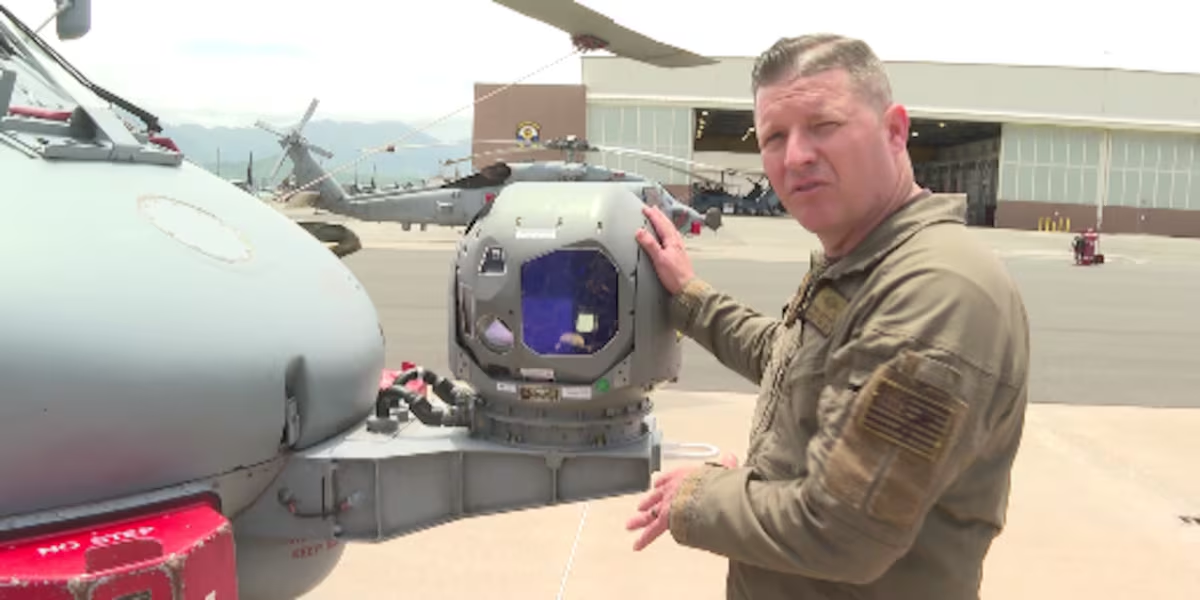
Helicopter crews from the U.S. Navy are preparing for disaster. There are 14 helicopters in the Navy unit called HSM-37 based out of Marine Corps Base Hawaii in Kaneohe.
Each MH-60R ‘Romeo’ is outfitted for maritime conditions with radar, Forward-Looking Infrared (FLIR) and cameras.
Recent rescue operations
One helicopter, number 44, responded to the Kona low storm in March, where a crew helped rescue five people and a dog from a flooded North Shore home.
Lt. Sean Carroll saw the devastation. “They came up one by one. Our rescue swimmer we sent him down on the rescue hoist and one by one he sent them up in a basket,” he said.
“It’s really sad to see these people losing their homes. The amount of flooding you are seeing — cars float down the street, power lines down — it’s really tough to see, so being able to help them out is pretty special,” he added.
Read more ‘Divine Disruption’: Religion meets pop culture in new Honolulu Museum of Art exhibit
Hurricane response simulation
The squadron recently completed preparedness exercises simulating a Category 4 hurricane, including search-and-rescue operations.
“We prepare our own facilities. We just got done a major HERREX exercise here and at Joint Base Pearl Harbor and us have done and that goes through the core levels for us of hurricane preparedness,” said Senior Chief Petty Officer Patrick Lowther, who’s responded to the Kona low rescues, the Maui wildfires and Hurricane Irma in Florida.
“Humanitarian assistance and disaster relief is going to be our major role. So it can be surveying to see if we can get ground crews out there where that be a large truck or if we actually have to go in and effect where people are otherwise entrapped and can’t get out,” he added.
Crews wear 30-pound vests that include a life jacket, a mini scuba bottle with up to three minutes of air, bulletproof plates on the inside, and an eight-pound helmet.
Saving lives in unpredictable weather conditions one of their missions. The squadron is always calculating safety and security so the preparation for disaster never stops.
Read more Coast Guard assists 20 adults, 1 child aboard disabled vessel offshore Maui


Post Comment