New water quality report shows more chronic coastal water pollution in Hawaii
HONOLULU (HawaiiNewsNow) – Three beach areas in Hawaii have the dubious distinction of being among the top ten coastal areas in the U.S. with the highest rates of bacteria that exceed recreational health standards.
Read more Rutgers: Hawaii is not ready to legalize gambling due to insufficient information
That’s according to the latest National Clean Water Report from the Surfrider Foundation.
“We have volunteers that go out and they sample our coastal waters for this fecal indicator called enterococcus,” said Hanna Lilley, the Hawaii regional manager for the Surfrider Foundation.
“When it is present in high concentrations, that indicates that there might be other harmful pathogens that can get you sick,” she added.
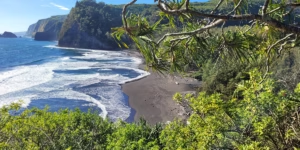
Punaluu Beach Park on Oahu and the Moloaa Stream mouth on Kauai also made that list. Both locations exceeded recreational health standards for fecal bacterial in 100% of samples collected last year.
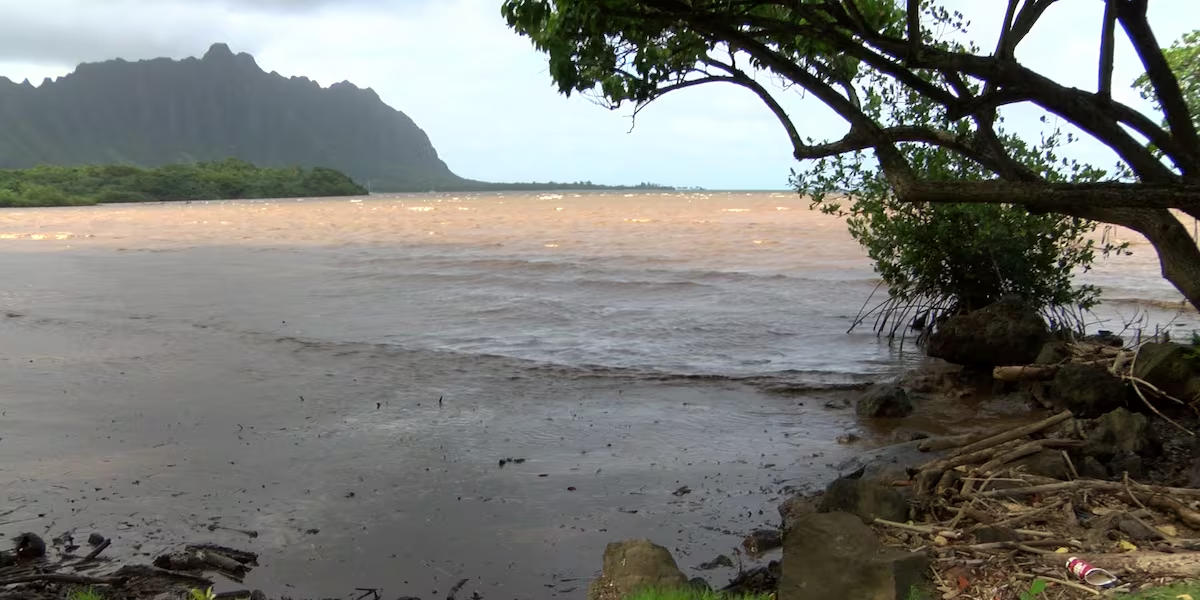
A third location, the Hakipuu Boat Ramp near Kualoa, exceeded standards 82% of the time, according to the report.
In its 2025 Hawaii Water Quality Report, the Surfrider Foundation said there were 24 sampling sites statewide that didn’t meet recreational health standards more than 50% of the times they were tested.
“People often view Hawaii as this paradise with pristine, aquamarine waters,” said Lilley. “Unfortunately that’s not often the case, and our data paints this concerning picture of chronic pollution across Hawaii’s coastal waters.”
Read more Live opossum captured near Honolulu Airport
The Surfrider Foundation blames cesspools as one of the greatest threats to water quality in Hawaii.
“Hawaii has the highest number of cesspools per capita in the entire nation,” said Lilley. “Approximately 83,000 cesspools and an estimated 50 million gallons a day of untreated sewage are going into our groundwater and ultimately the ocean.”
The state has mandated that all cesspools be removed by the year 2050.
“We really need to work on those cesspool conversions,” said Dr. Nyssa Silbiger, an associate professor at the Department of Oceanography at U.H.-Manoa. “We need to maintain the pollution up in the mountains. We need to maintain pollution out of our streams and our groundwater because that’s really going to affect our reef.”
Silbiger helped spearhead a project that collected nearly 800 samples of coastal water in the weekend after last March’s kona storms. While the research isn’t complete, it has found that polluted freshwater from the storms remained close to the coast longer than expected, which Silbiger said is bad news.
“The way that I think about this, sadly, is a preview. A preview of what’s to come. And these storms are going to be getting more intense with climate change,” she said.
“We can expect to see worsening water quality in coming years, un fortunately, as climate-driven impacts like sea level rise, flooding and more intense storm events further exacerbate Hawaii’s wastewater challenges,” said Lilley.
Read more ‘Just blessed’: Kapolei’s Amisone helps Hurricanes to inaugural DII flag football title




Post Comment