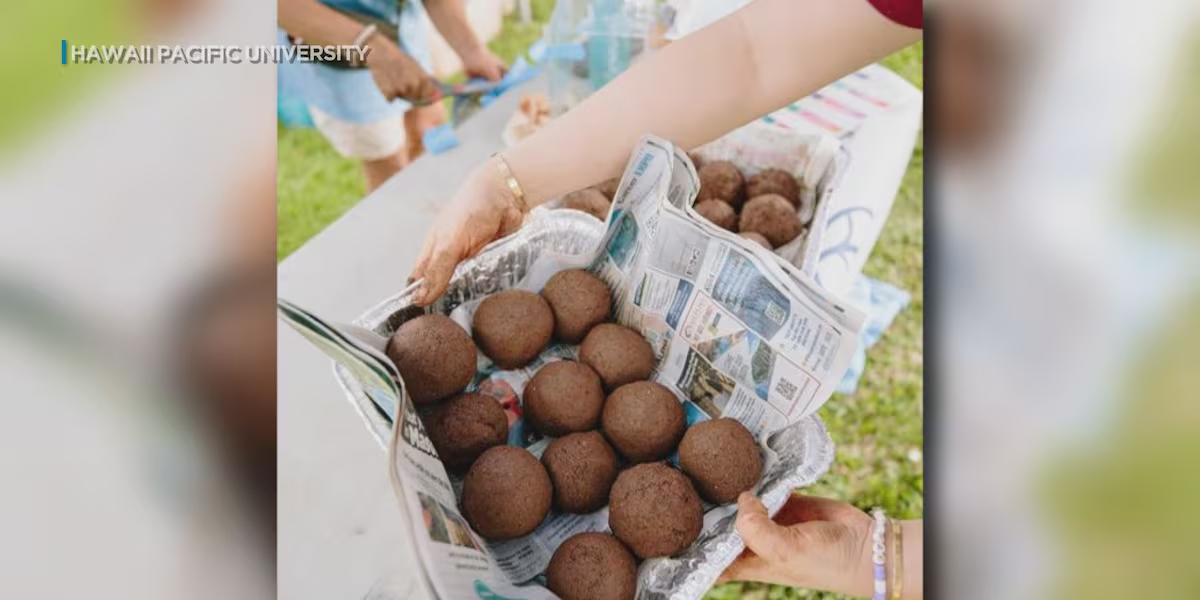
Symposium examines effectiveness, safety of genki balls on water quality
HONOLULU (HawaiiNewsNow) – The effectiveness and safety of genki balls, a popular community-driven, anti-pollution initiative, were the focus of a symposium Thursday at Hawaii Pacific University.
Read more Kauai police chief outlines priorities, solutions amid staffing shortage
The handmade mud and clay spheres, packed with so-called effective microorganisms, have been widely used in Hawaii waterways — particularly the Ala Wai Canal, where organizers say more than 300,000 genki balls have been tossed over the past seven years.
However, new research presented by HPU scientists is raising questions about whether the balls actually improve water quality.
Dr. Carmella Vizza, an HPU professor who led the research team, said, “Our goal was not to draw conclusions about public health risks, but to ensure that appropriate agencies had the opportunity to evaluate that evidence.”
The HPU team conducted laboratory testing and a two-year field study at Hamakua Marsh.
Researchers said they found no evidence that genki balls improved water quality and, in some cases, observed potentially harmful effects.
According to the study, higher application rates caused dissolved oxygen levels in water to drop significantly.
“Low oxygen levels can lead to fish kills and harm other aquatic life, including native species,” Vizza said.
Researchers also reported identifying a potentially harmful organism within the effective microorganism mixture used in the balls, prompting concerns about human exposure.
“We found out that there is this potentially harmful organism in the EM. That’s when we got really concerned,” Vizza said.
“I felt like it was our duty to approach (the Hawaii Department of Health) and say, ‘Hey, this is maybe something you should look into because children are handling genki balls without gloves,’” she added.
View the team’s presentation slides:
Genki Ball Impacts Presentation HPU by HNN
Researchers said they shared their findings with the Hawaii Department of Health and sent multiple follow-up emails, but had not received a response.
Read more Deal clears way for Kilauea District Park programs to continue
In a statement to Hawaii News Now, the Department of Health said it has since met with both HPU researchers and representatives from the Genki Ala Wai Project to discuss concerns and study findings.
DOH said it has formally requested HPU’s published study and additional monitoring data from project proponents and is currently awaiting information from both parties.
The department said there is currently limited scientific evidence to clearly determine either the benefits or potential concerns associated with genki ball use in state waters.
The DOH noted that while some materials used in genki ball construction, particularly soil, could be interpreted as pollutants under certain regulatory definitions, the stated purpose of the activity is bioremediation intended to improve water quality.
The department also said it appreciates the Genki Ala Wai Project’s efforts to raise public awareness about water quality issues and recognizes HPU researchers’ attempts to provide independent scientific evaluation.
“Based on available information, DOH will neither authorize nor prohibit the use of genki balls in state waters at this time,” the statement said. “DOH reserves the right to revise this position should additional information warrant a different determination.”
Supporters of the genki ball initiative maintain that the project has provided environmental benefits beyond water quality testing by increasing public awareness about pollution and encouraging community stewardship.
The project said they aren’t stopping and claim it helps clean the water.
State Sen. Brenton Awa said the initiative has engaged residents in environmental issues and inspired action.
“At the end of the day, we’re all living in a place where the water is polluted,” Awa said. “We took a shot at not only cleaning our environment, but teaching all the people who live in it, and the progress that we made is undeniable.”
The symposium highlighted growing debate over the role of community-based environmental projects and whether additional scientific review and regulatory oversight of genki ball programs may be needed moving forward.
Read more Visually impaired Kaneohe golfer wins at US Adaptive Open



Post Comment