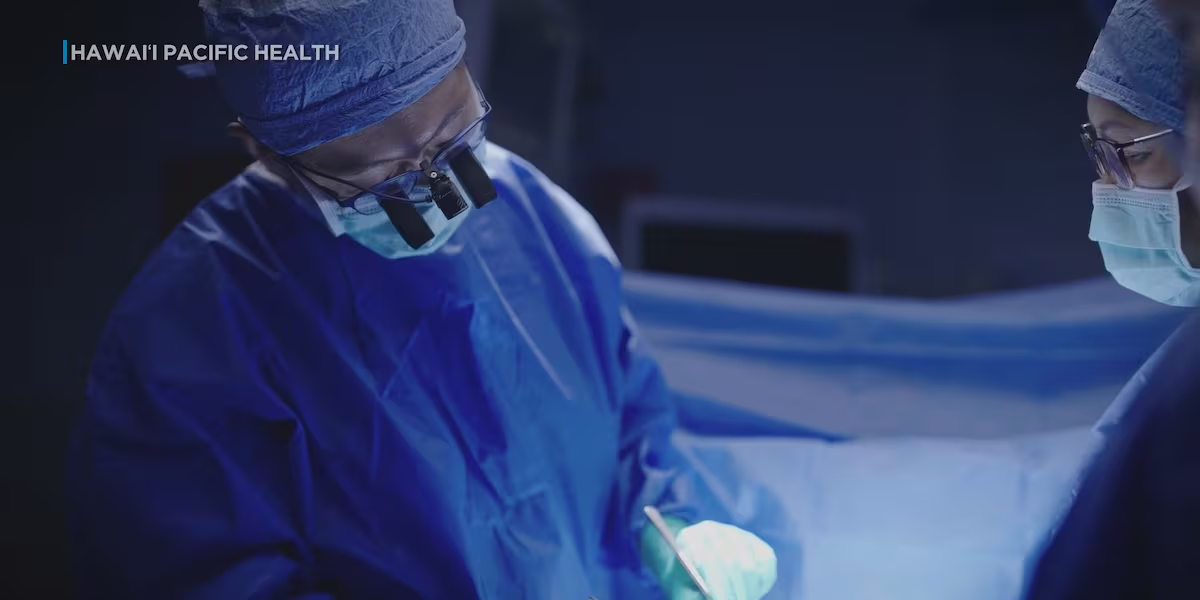
Hawaii’s only full-time pediatric heart surgeon says early diagnosis helps keep kids close to home
HONOLULU (HawaiiNewsNow) – Each year, about 10,000 babies in the United States are born with a heart defect. In Hawaii, about two out of every 1,000 newborns are born with a critical heart defect.
Read more Chinese man arrested in Honolulu charged with visa fraud
Dr. Hiroo Kinami, Hawaii’s only full-time pediatric cardiac surgeon, said having a robust pediatric heart program at Kapiolani Medical Center for Women & Children can mean the difference between families staying together at home and being forced to seek care thousands of miles away.
“This program allows more kids here in Hawaii to receive life-saving heart care close to home,” Kinami said.
Keeping care in Hawaii
Before Kapiolani’s pediatric heart program expanded, many families had to travel to the mainland for surgery or wait for visiting surgeons to come to Hawaii, Kinami said. Either option could delay time-sensitive treatment and add major costs.
Traveling for medical care can bring heavy financial and emotional strain, he said, including time away from work, the expense of flights and lodging, and the stress of being separated from relatives and support systems.
Kinami said the goal is to keep as many pediatric heart patients as possible in Hawaii for their care.
Now, the vast majority of pediatric heart patients can be treated at Kapiolani, allowing family members to remain close and more involved in a child’s care.
Why timing matters
Early diagnosis is critical because timing can determine outcomes, Kinami said.
Delayed treatment can lead to worsening heart function, poor growth, breathing difficulties, and other complications. In some cases, he said, damage can become permanent when care does not come at the right time.
When to seek help
Kinami encouraged families and health care providers to contact Kapiolani’s Heart Center early whenever there is concern for a heart condition — even when a diagnosis is not yet clear.
Read more Honolulu firefighters extinguish warehouse fire in Kapolei, no injuries reported
Reasons to reach out may include a prenatal diagnosis, an abnormal newborn screening result, or a heart murmur. Parents and doctors should also take note of symptoms such as poor feeding, poor weight gain, bluish skin color, fast breathing, chest pain, fainting during exercise, or a child with known congenital heart disease who needs ongoing care.
“Early consultation helps us guide the next step,” Kinami said.
Treating the smallest hearts
Some newborns need urgent heart surgery soon after birth, Kinami said.
“An adult heart is about the size of a fist, but a baby’s heart can be as small as a strawberry,” he said.
While the start can be frightening for families, Kinami said outcomes for children born with heart defects have improved dramatically over the last several decades.
He said congenital heart surgery survival rates are now about 95% to 97%.
Many children can grow, go to school, play sports, and live into adulthood, he said. Some patients will need lifelong follow-up, but with early diagnosis, timely treatment, and coordinated care, Kinami said the focus is on helping each child live as normal and active a life as possible.
Care available locally
At Kapiolani, the pediatric heart team treats a wide range of congenital heart disease — from common conditions such as holes in the heart to more complex newborn heart problems that require surgery early in life, Kinami said.
The program is continuing to expand its capabilities, which Kinami said will allow the hospital to treat more complex cases.
Being able to do more heart procedures in Hawaii often means earlier treatment and, in general, better outcomes, he said.
Read more Teen with machete accused of stealing car in Waianae, crash leads to arrest







Post Comment