Hawaii Supreme Court hears arguments on DUI field sobriety test refusals
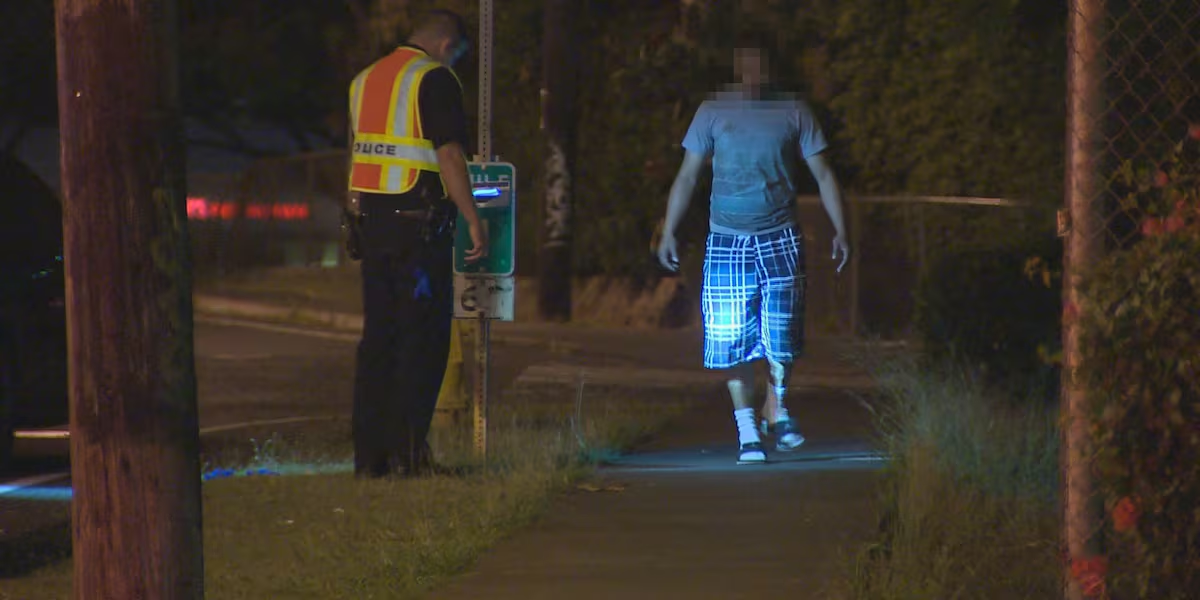
HONOLULU (HawaiiNewsNow) – The Hawaii Supreme Court heard arguments Thursday on whether a driver’s refusal to take a voluntary roadside sobriety test can be used as evidence of guilt in civil, license revocation cases, and potentially the criminal case.
Read more FBI warns AI is making scams harder to spot — and Hawaii is paying the price
The ACLU of Hawaii joined defense attorney Kevin O’Grady in seeking clarification on whether refusing to take the Standardized Field Sobriety Test (SFST) should count against a driver.
“The government must produce evidence from its own work not through forced physical actions. A person cannot be punished for exercising a right, including the right to not provide evidence to the police,” said O’Grady.
Emily Hills of ACLU of Hawaii said there are multiple reasons someone might decline the test.
“That’s the problem with allowing across the board, inference consciousness of guilt. There’s a variety of innocent reasons why someone might refuse,” she said.
Hills pointed out multiple reasons in her brief, including physical disabilities and potential language barriers.
Read more Hawaii Symphony Orchestra announces reimagined season finale
Justices raise questions about fairness
Associate Justice Sabrina McKenna brought up age: “If someone over the age of 65 refuses, says, ‘No, I don’t want to take it,’ that can be used as consciousness of guilt?”
Associate Justice Todd Eddins questioned the fairness of using a refusal against a defendant when drivers are not fully informed.
“Told it’s voluntary. They’re told that there’s civil consequences if they refuse, but they’re not told that if you refuse this could be used against you in court,” Eddins said.
“A confession without any knowledge,” Eddins said.
The state argued that a driver’s refusal to take the test should still be considered as part of the evidence, along with other factors.
“There’s no constitutional right to refuse the SFST. That denial is not protected in any way. That can be used as evidence as any other piece of evidence can be considered,” said Sianha Gualano, deputy solicitor general of the state attorney general’s office.
Read more Waikiki Aquarium to host events throughout World Ocean Month
A ruling from the Hawaii Supreme Court will likely take several months.




Post Comment