Scientists say North Shore corals are now dying due to mud from the Kona low storms
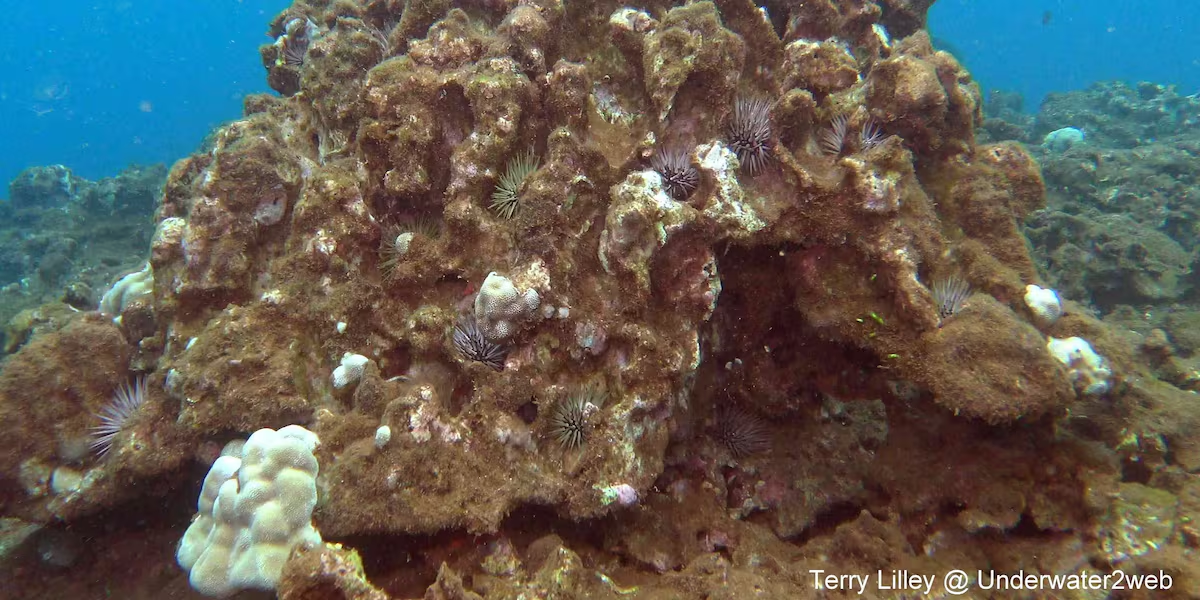
HALEIWA (HawaiiNewsNow) – The flooding from March’s Kona low storms left a coat of mud on coral reefs around Oahu’s North Shore. And a longtime local marine biologist says that coral is now dying because of it.
Read more Hilo man sentenced for possessing child pornography
“I’ve never seen in the last 20 years this much mud, in the water, along the North Shore,” said marine biologist, diver and Pupukea resident Terry Lilley.
Lilley has been studying Hawaii’s coral reefs for decades. He’s now documenting the damage from Sunset Beach to Haleiwa following the devastating flooding.
“Yesterday and today when I got done with diving, at 50 feet deep at Shark’s Cove, there’s still an inch of mud on the reef,” he said.
Lilley said he has taken hours of video and thousands of photos on his dives. Many of the photos show the bottom coated with brown muck suffocating the coral reef.
“If you suffocate the coral, it will kill the tissue that’s on top of the skeleton, and so what is left behind is that coral skeleton, which is limestone. And that usually gets covered by algae pretty quickly,” said Nyssa Silbiger, an associate professor in the Department of Oceanography at U.H. Manoa.
Lilley said corals can survive for up to three months covered with mud. But large areas of coral are also bleaching — a sign that they are under stress.
“Out of those bleached corals — now, it’s been, what, over three months since the Kona low — and about 95% of the bleached corals are either dead or starting to die,” said Lilley.
Read more Mountain West media days unite former ‘Bows-turned-coaches Chang, Niumatalolo
This is happening as scientists monitor warming ocean waters that could further endanger the coral.
“We have one of the strongest El Ninos that’s occurring right now, so we’re expecting some pretty warm heat waves to be coming through for the next few months,” said Silbiger.
Wave action closer to the shoreline has cleaned off the mud in shallower areas, but the mud and debris will remain in deeper offshore waters until the winter surf swells roll in.
“We’re not going to get any cleaning of that part of the reef until we get our big winter swells, coming up in October or November. So the mud just sits there,” said Lilley.
Lilley has been sharing his findings with the state Division of Aquatic Resources. He still remains optimistic that the corals will eventually recover, once the mud is gone.
Meanwhile, Silbiger said groups like Eyes of the Reef are also keeping close tabs on the health of the coral.
“There are researchers looking at coral cover, coral disease increases, there are researchers looking at the microbial composition of the water, there are researchers that are looking at e. coli,” said Silbiger.
Read more 3 charged in alleged $1.2M fraudulent check scheme





Post Comment