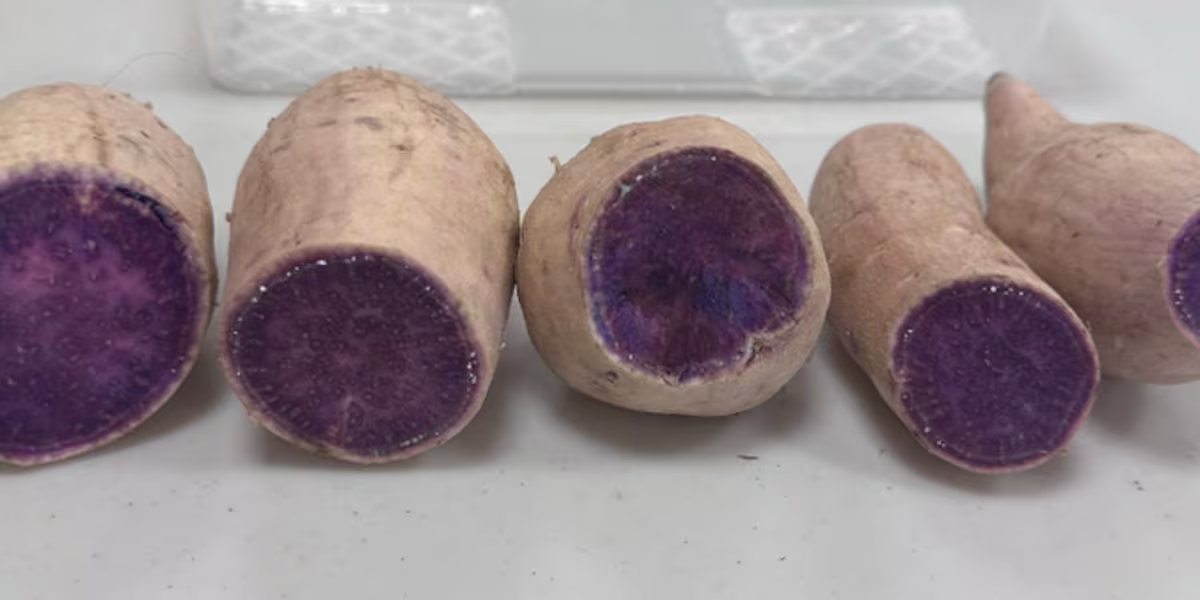
UH researchers work to grow virus-free sweet potatoes for Hawaii farmers
HONOLULU (HawaiiNewsNow) – Researchers with the University of Hawaii College of Tropical Agriculture and Human Resilience (CTAHR) are working to protect an important staple of Hawaii’s agriculture before they reach farmers’ fields.
Read more Guided tours take visitors into Honouliuli internment camp’s ‘Hell Valley’
The National Clean Plant Network Sweetpotato-Hawaiʻi Center in Hilo is the nation’s only clean-plant center dedicated to Okinawan sweet potatoes and traditional Hawaiian heritage ʻuala.
There, researchers are developing planting material to grow virus-free sweet potatoes. They grow tiny parts of the plant, then remove viruses that could affect future plantings.
“Removing virus is very important because a lot of these viruses can really affect production yields upwards of 40%,” said Sharon Wages with CTAHR.
Wages said the crop is increasingly important to Hawaii’s economy, contributing about $4.8 million. Last year, island farmers harvested more than six million pounds of the root vegetable.
Read more Spotlight Now: Belatti, Kawakami talk policy in lieutenant governor forum
Sweet potatoes are grown on about 400 acres, “primarily located on the Big Island in the Hāmākua area,” Wages said.
The center maintains 11 unique sweet potato varieties and works closely with local growers to develop lines that are both nutritious and marketable.
“Right now, we’re getting very close to cleaning and releasing a specific line of sweet potatoes that were found on the Big island that have shown to have nice uniformity and that really dark purple color,” Wages said.
The thriving plants are multiplied and distributed, giving local farmers a starting point for a healthy crop.
Read more Lindsey Graham’s sister will serve the remainder of his term, governor says









Post Comment