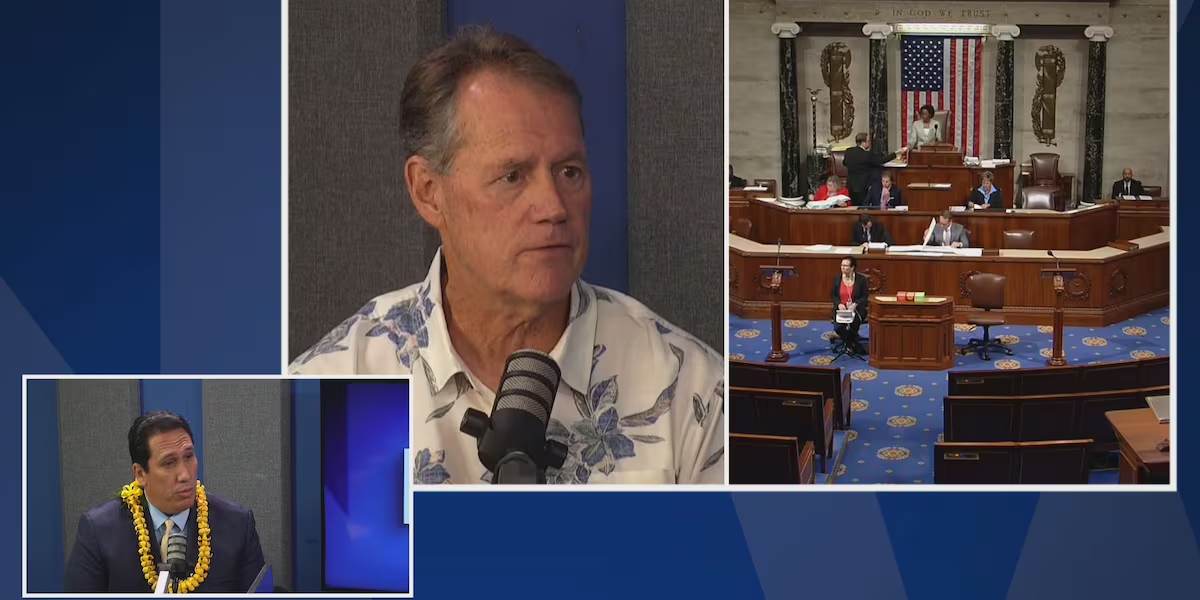
New York Times flags Rep. Ed Case as vulnerable in Hawaii’s 1st District primary
HONOLULU (HawaiiNewsNow) – The New York Times has identified U.S. Rep. Ed Case as one of six Democrats vulnerable in upcoming primaries, drawing national attention to his race against state Sen. Jarrett Keohokalole for Hawaii’s 1st Congressional District seat.
Read more Father Michael Castori to be ordained, installed as Honolulu’s sixth bishop
The national spotlight
The Times characterized Case as the kind of veteran moderate at risk of losing to a progressive challenger — a pattern seen in four recent Democratic primaries.
Case pushed back on the assessment.
“With due respect to the New York Times, they don’t know Hawai’i,” Case said in a statement. “This election remains about who can best solve our problems like our unacceptable cost of living and best represent all of our Hawai’i in Congress in challenging times.”
Keohokalole’s opening move
Keohokalole launched his first media buy with an ad focused on name pronunciation, featuring a jingle and children helping viewers sound out his name.
“We wanted to make it fun and give people a chance to hear it,” Keohokalole said. “I’m excited about it. We’ve gotten a lot of feedback already.”
The ad contrasts with Case’s messaging, which centers on seniority and legislative power.
“As an eight-year member of our powerful Appropriations Committee, I’ve successfully funded over $300 million for over 54 worthy community projects across my district,” Case said in campaign video.
Keohokalole pointed to national trends as favorable to his campaign.
“As you can see from races across the country, people want change,” he said. “Incumbents are having a hard time holding their seats because things are not going well.”
Read more 1 injured in crash that left car on its side
Money and name recognition favor Case
Case holds a significant fundraising advantage, having collected more than $800,000 compared to Keohokalole’s $588,000. More than half of Case’s contributions came from political action committees, while Keohokalole’s funding came primarily from individual donors.
Case also holds a commanding cash-on-hand advantage — nearly $900,000, more than triple Keohokalole’s reserves.
University of Hawaii political science professor and HNN political analyst Colin Moore said the race may not follow the national pattern.
“I still would give Ed Case the advantage going into the election because of his name recognition, because Hawaii voters very rarely turn out incumbents, especially those they’ve known for years or decades,” Moore said.
With the money and recognition advantage, Case has declined to debate Keohokalole.
Keohokalole said his campaign is focused on a grassroots strategy.
“We’re getting our message out right now on digital, on social, knocking on doors, making phone calls,” he said. “We’re doing this from a grassroots approach.”
Moore said Case’s position remains strong.
“Ed Case still has a very compelling message that will resonate with many of the sort of voters who always vote in these primaries — older voters, union voters,” Moore said. “This is going to be a close race.”
Read more 6 cars stolen from Honolulu used car lot after thieves cut gate lock, break safe








Post Comment