New Hawaii law to require ahi labels to disclose origin
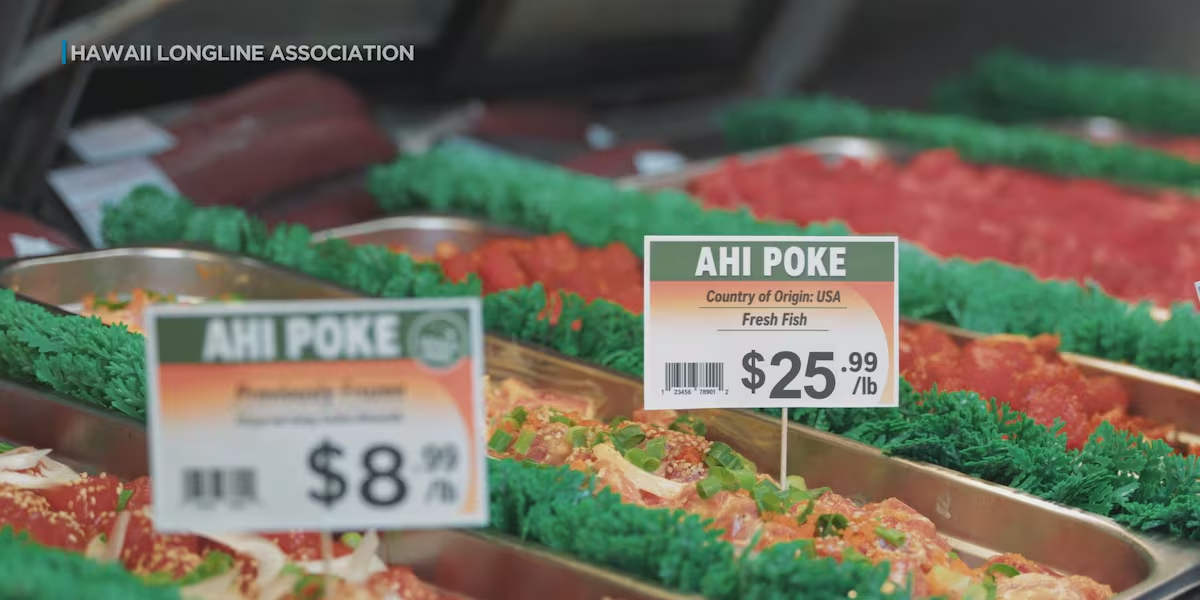
HONOLULU (HawaiiNewsNow) – Starting July 1, some retailers in Hawaiʻi will be required to give customers more information about the ahi they’re buying, including where the fish was caught.
Read more Attorney General announces charity amnesty program
Supporters of the new law say the added labeling will provide more transparency and help local fishermen compete in a market dominated by imports.
“I think a lot of consumers didn’t know that most of the ahi poke sold at retailers is not from Hawaii,” said Eric Kingma, executive director of the Hawaii Longline Association.
Kingma said if consumer products like clothing are required to disclose where they are made, seafood should be no different.
“If our clothes are required to say where they’re manufactured, why not what we eat?” he said.
The Hawaii Longline Association estimates about 90% of ahi sold in Hawaii is imported and often previously frozen.
According to Kingma, much of that imported fish comes from countries including Vietnam, Indonesia, the Philippines and, to a lesser extent, the Marshall Islands. He added that much of the ahi imported from Vietnam is caught by Chinese vessels.
Imported frozen tuna can also be significantly cheaper than locally caught fresh fish.
“You can kind of see the frozen import can almost be at least 50% less,” said Michael Goto, vice president and auction manager at United Fishing Agency.
In some cases, industry leaders say processing goes beyond freezing.
Kingma said some lower-grade tuna is treated to restore color before reaching store counters, a product known in the industry as “vitamin tuna.”
Read more Pearlridge Texaco closes after 60 years
“That’s being injected with additives like ascorbic acid, which is vitamin C, hence the name vitamin tuna, and then other additives like beet juice for color, sodium nitrate,” Kingma said.
For some consumers, those additives are concerning.
“I don’t want really any dye or any type of things that’s going to make it fresher because it should already be fresh,” said Amaya Thomas, host at Nico’s Pier 38. “It’s grown in the ocean. It should just be caught and then I should eat it. There shouldn’t be any additives.”
Visitors also said clearer labels could influence how they shop while in Hawaiʻi.
“Having the comfort of knowing where their food is coming from and where it’s locally sourced at, that’s really important,” said Hannah Patcheck, a tourist from Colorado.
Baylen Patcheck said the law could also help support local businesses and fishermen.
“We come from a smaller town, so supporting locals there is huge,” he said. “And I think if it does it here, that’s even better.”
Beginning July 1, the rule applies to larger retailers licensed under the federal Perishable Agricultural Commodities Act, including stores such as Foodland, Times, Safeway, Whole Foods, Costco and Don Quijote.
State officials said enforcement will begin with education and outreach to retailers, though violations could eventually result in fines.
Read more Knife found hidden in passenger’s prosthetic at HNL airport TSA checkpoint






Post Comment