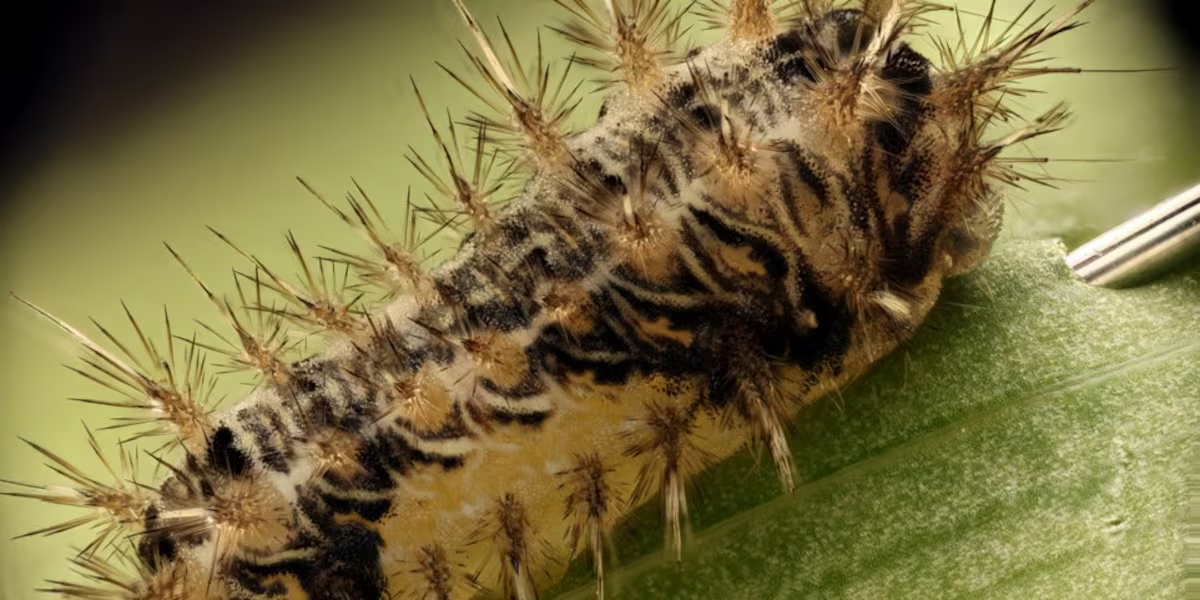
New reports of stinging caterpillars prompt state to take action
HONOLULU (HawaiiNewsNow) – Nettle caterpillars are being spotted around Hawaii. They’re an invasive species causing concerns as their sting can be painful.
Read more First Alert Forecast: More passing showers and gusty trades build
“I think it’s definitely gonna be an issue for people like me who wanna do cut flower business,” Maui resident Hailey Ramos said.
They’re a threat to host plants like ti leaves, areca palms, and other tropical plants.
“They have tiny stinging hairs, similar to fiberglass, and they release an irritant which is a mixture of histamines produced by a poison gland,” Reina Tong, a Department of Agriculture entomologist said.
The Hawaii Department of Agriculture and Biosecurity team said more reports are popping up in windward Oahu, but that’s not the only place.
In Haiku, on the island of Maui, Ramos has seen about 12 of them in her plants in the last six months.
“I’ve been trying to take it very seriously and making sure that I notice the signs of the missing chunks of the leaves and taking care of that,” she said.
First detected on the Big Island in 2001, nettle caterpillars are rather small and can be difficult to spot.
Read more Maui County to hold blessing for completed Front Street improvement project
“They’re probably maybe about not even the tip of my finger, and they’re very thin, like thinner than a pencil,” Ramos said.
So what’s being done to address the pests? Controlled releases of parasitoid wasps which are predators of the caterpillars. Ag experts say they don’t sting humans.
“Our technician releases about 150 wasps per site in an area,” Tong said. “She has released in the last four months about 1,500 of these.”
They added that 10 communities over the last four months have requested help from the department with a biocontrol release.
“I’ve been trying my best on the ground, but it’s kind of a concern because people who don’t really check their plants often are possibly a breeding ground,” Ramos added.
If you get stung, monitor symptoms and contact a doctor if you experience severe allergic reactions.
Monitoring your plants for the pests and reporting sightings to the Department of Agriculture’s 643-PEST hotline can help stop the spread of the insects.
Read more Friends, family seek answers 50 years after North Shore disappearance




Post Comment