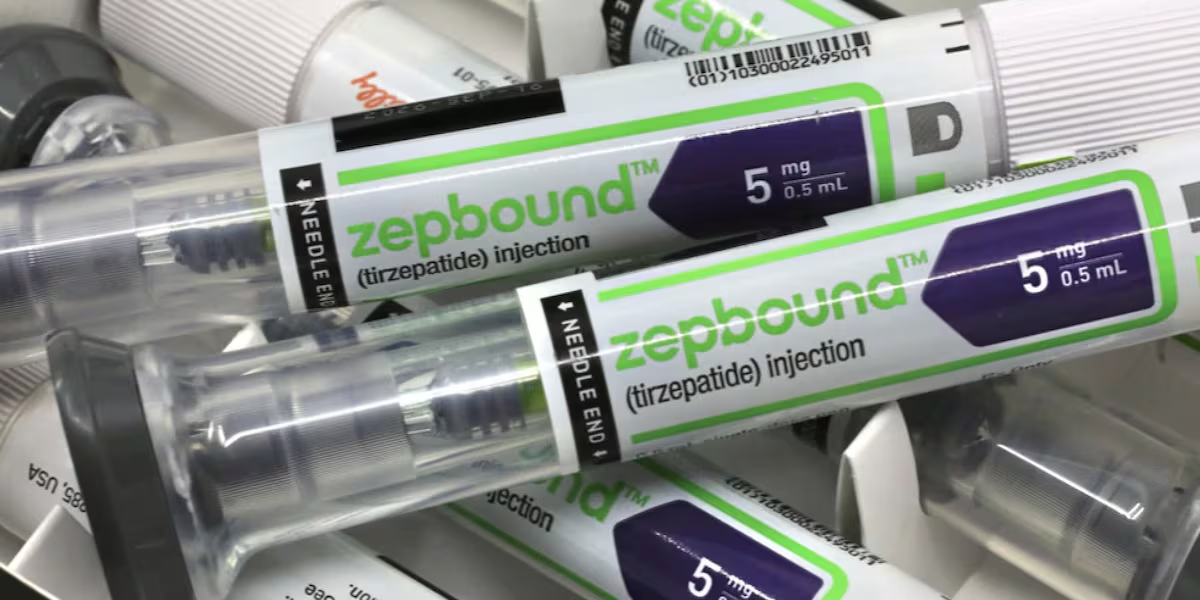
Healthier Hawaii: What to know about GLP-1 weight loss medications
HONOLULU (HawaiiNewsNow) – GLP-1 medications like Ozempic and Wegovy are growing in popularity for weight loss.
Read more Honokaa captures first State baseball title in school history
Nearly 42% of adults in the U.S. are obese, according to the Centers for Disease Control and Prevention — more than 100 million Americans.
With that, there’s a growing trend of GLP-1 weight loss medications such as Ozempic and Wegovy.
Dr. Marti Taba, Hawai‘i Pacific Health’s chief of Family Medicine for Kailua and Kaneohe, says the medications can help many patients — but they should be approached as part of a broader plan to improve health.
GLP-1s are a tool — not the only answer
Taba said GLP-1 medications are one tool for weight loss, and they aren’t the right fit for every person.
“These medications are fairly new, so 30-year data is not available yet,” she said. “But the GLP-1 data so far is promising.”
She emphasized that obesity can have serious long-term impacts.
“What we do know is obesity is dangerous — especially long term — and can lead to several other health conditions, including some types of cancer,” Taba said.
Because each patient is different, she recommends talking through options with a medical provider.
“You should really work with your doctor to figure out what works best for you,” she said.
If I take a GLP-1, will I automatically lose weight?
Not necessarily.
Taba said GLP-1 medications can help people feel full faster and longer by slowing digestion, meaning food stays in the stomach longer.
“These medications will help many patients lose weight,” she said. “But without changing diet, they will plateau at some point.”
When weight loss stalls, patients sometimes move up in dosage, she said — but that can also increase side effects like nausea, vomiting and constipation.
Taba said patients should treat GLP-1s as support — not a substitute for lifestyle changes.
Read more First Alert Forecast: Partly cloudy skies with trade showers today
“This is a tool to lose weight,” she said. “Patients still have to change their diet and habits — or it’s actually possible to gain weight while on a GLP-1.”
What happens if you stop taking it?
Taba said it’s possible for patients to regain weight after stopping the medication — and how much can depend on the changes they made while taking it.
“It’s very possible that a patient will gain some of the weight back, but it really depends on how much they changed their diet and habits while they were on the medication,” she said.
Some people regain weight quickly, she said, while for others it happens more slowly.
“Again, it really comes down to how a patient eats when they were on the GLP-1 as opposed to before they were on it,” Taba said.
Who qualifies for GLP-1 medications?
Taba said insurance coverage requirements can vary, but typically involve BMI and health history.
She said common criteria for coverage may include:
However, Taba said coverage can differ even among people who have the same insurer.
“A lot of this depends on your health insurance plan, which can vary,” she said. “Just because you have the same health insurance provider as someone you know who’s on a GLP-1, your plan may not cover the same medication.”
Don’t buy GLP-1 medications online without a prescription
Because of the medications’ popularity, some people are seeking GLP-1s through online sources without a prescription.
Taba said she has heard of people being hesitant to ask their physician and going elsewhere, but she urged patients to talk with their doctor instead.
“Our goal is to make our patients healthier,” she said.
She warned that outside sources can be expensive and may pose safety risks.
“Getting medication from outside sources may not only be expensive, but also risky from a safety standpoint,” Taba said. “There’s no shame in asking your doctor about these medications or other ways to help you lose weight.”
Read more Healthier Hawaii: National Physical Fitness and Sports Month







Post Comment