‘Very predatory’: Hawaii recording artists say AI platforms are stealing their music
HONOLULU (HawaiiNewsNow) – Some Hawaii recording artists claim artificial intelligence websites worth billions of dollars have been stealing their music, as a legal battle is underway to get the song-generating platforms to compensate musicians.
Read more Honolulu firefighters rescue 2 in Kunia crash
There are nearly 10 million music tracks from around the world listed in The Atlantic magazine’s AI Watchdog database that were allegedly taken without the artists’ permission to create music.
Hundreds of the songs in the inventory come from Hawaii artists spanning decades, from classics like Israel Kamakawiwo’ole’s “White Sandy Beach,” to numbers from newer recording artists, such as Anuhea and Kolohe Kai.
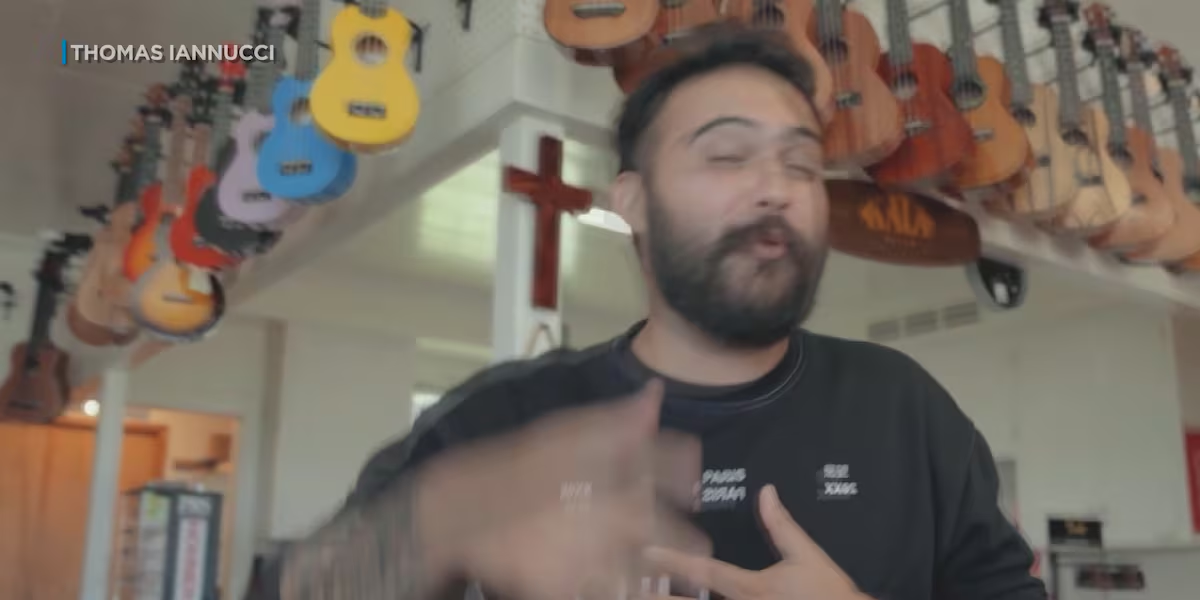
Na Hoku Hanohano award-winning rapper Thomas Iannucci is also in the mix.
“They took these songs without our consent, without asking, without paying, no compensation, and for free, basically, or in other words, stealing,” Iannucci said.
The Kauai-based recording artist found out just days ago that his music is in the AI Watchdog from a friend in the industry.
“It felt very predatory. It felt very annoying more than anything else,” Iannucci added.
The Atlantic created the Watchdog dataset as it investigates tech companies such as Suno and Udio. The AI music generators are facing class-action lawsuits for alleged copyright infringement.
Read more First Alert Forecast: Stronger winds with scattered showers expected today through tomorrow
“They’re not just going after big-time artists, right? They’re going after smaller regional local acts, people like myself. We don’t have the means or ability to defend ourselves legally,” Iannucci said.
Professional songwriter Chaz Umamoto added, “Suno has a $5 billion value…and I know so many artists here that couldn’t survive during the pandemic.”
Umamoto and Iannucci are considering joining the lawsuit.
“There have been some big cases that have given us some guidance, but because it’s so complicated, a lot of people just don’t even touch it. A lot of those cases settle. Because of that, there’s actually not a ton of case law to make it really clear,” Hawaii entertainment lawyer Julia Brotman said.
One thing is clear: Iannucci and Umamoto are asking others to beware and not buy into the AI music makers.
“It is not artificial creativity, it’s artificial intelligence, and where that intelligence is being derived from, none of us agreed to that usage,” Umamoto argued.
HNN reached out to Suno and Udio’s attorney for comment, and we’re waiting to hear back.
Read more Former Honolulu city employee charged in alleged $800k Hawaii Foodbank fraud




Post Comment