Medical system, employers scramble to meet demand for women’s mid-life healthcare
HONOLULU (HawaiiNewsNow) – A January 2026 report by the World Economic Forum and Boston Consulting Group reveals that women’s health captures just 6% of the $2.9 trillion in total private health care investment, and is mostly focused on women’s cancers, reproductive health and maternal care.
Read more First Alert Forecast: Lots of sun, light winds
Conditions such as perimenopause and menopause are highly overlooked and underfunded, receiving less than 2% of private health care funding, despite affecting hundreds of millions of women globally.
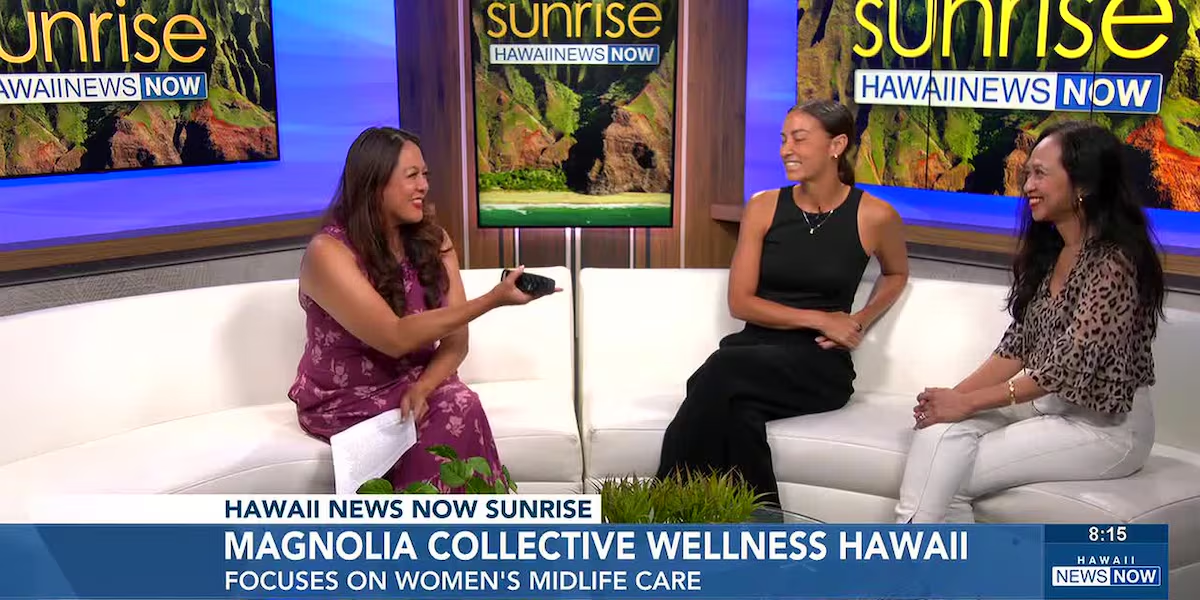
Jennifer Ablan, editor in chief of Hawaii Business Magazine, and Kelly Yamamoto, co-founder of women’s mid-life healthcare provider Magnolia Collective Wellness, joined HNN’s Sunrise to talk about the investment gap and an emerging movement to address women’s health issues that are affecting the global economy and workforce.
“Research from the McKinsey Health Institute has found that women spend an average of nine years of their lives in poor health, affecting their ability to participate fully at home, at work and in their communities,” Ablan writes in the cover story of Hawaii Business Magazine’s October issue. “Women also spend 25% more time in poor health than men. Closing that health gap, McKinsey estimates, could add at least $1 trillion annually to the global economy by 2040.”
Read more Hawaii, Taiwan Indigenous leaders sign kinship declaration to strengthen cultural education
Yamamoto, a medical nurse, says while more funding is being channeled to mid-life health concerns like perimenopause, infrastructure does not exist and there is not enough data to help doctors and employers create services and programs that support women between their 40s and 60s.
Ablan cites a 2023 Mayo Clinic study that estimates menopause symptoms account for $1.8 billion in lost work time annually in the United States, and up to $26.6 billion when medical expenses are included.
“This is frequently described as a women’s health issue, but it is also a workforce issue,” Yamamoto tells Hawaii Business. “If we want to retain experienced leaders, clinicians and professionals, we have to recognize that women’s health is workplace health.”
Read more Drivers heading toward Hanalei urged to plan for significant traffic delays
Read the full article in the October issue of Hawaii Business Magazine.







Post Comment