Hawaii Supreme Court upholds murder conviction of Molokai man who confessed to killing his girlfriend
HONOLULU (HawaiiNewsNow) – The Hawaii Supreme Court has affirmed the 2022 murder conviction of Mariano Garces Jr., who confessed to killing his girlfriend.
Read more New York governor pardons Hawaii Purple Heart veteran forced to self-deport
His attorney argued that his client’s emotional confession should have been thrown out. Justices disagreed and upheld the conviction.
The 911 call
Garces called 911 after the brutal attack, but admitted he fell asleep before calling for help.
“This is 911. What’s your emergency?” the dispatcher asked.
“You can go to my house. I think I went kill Amie,” Garces said.
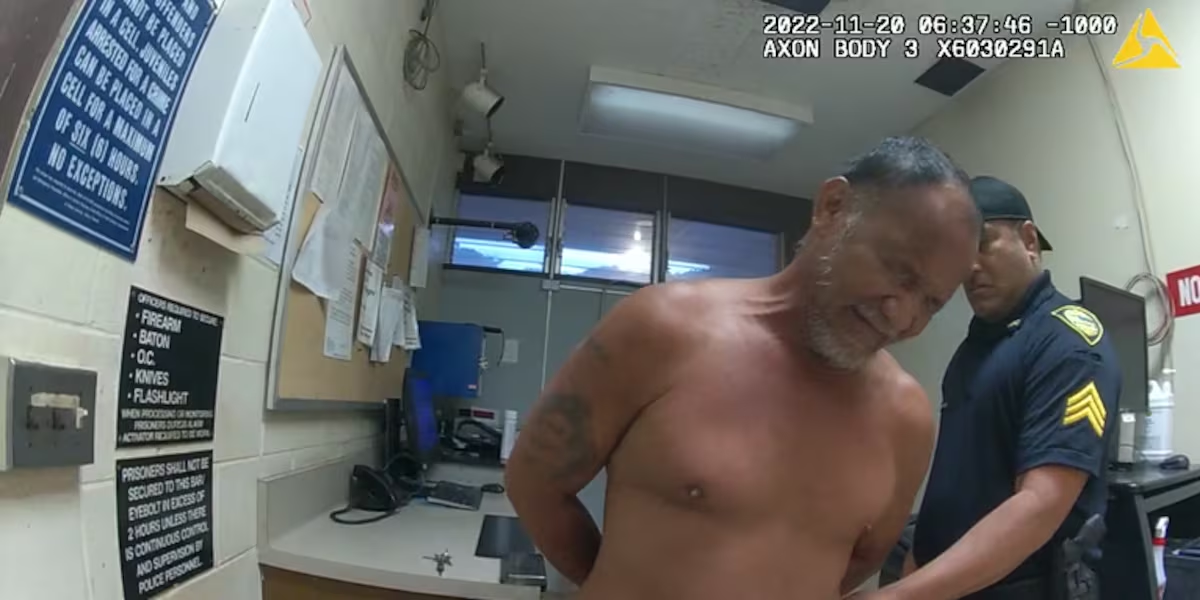
When the officers arrived on scene, their body-worn camera videos show Garces in handcuffs outside his Molokai home.
“I went try save her,” Garces told an officer.
“Okay, before you say anything, Mariano just…,” the officer responded.
Repeated admissions
The murder happened on Nov. 19, 2022. Garces repeatedly admitted that he killed Amie Kaholoaʻa, his girlfriend of about a year. He became angry that his prayers to bring her back to life were not answered.
“I don’t believe in the Lord now. The Lord is nothing. I asked for his help, I asked for his help. He no help me,” Garces told the officer.
He said he beat Kaholoaʻa with a stainless steel vacuum extender and then suffocated her with a shirt because he believed she was cheating on him.
At one point during the arrest, Garces, still handcuffed, became agitated and was suicidal.
“I’m gonna run away, brah,” Garces said.
“Mariano, no,” an officer responded.
“I’m gonna run away now, brah. I’m gonna run away,” Garces said.
“No,” the officer said.
“I going run away, brah,” Garces said. “Shoot me, brah. Shoot me. Just shoot me, brah.”
Read more Hawaii Supreme Court declares Council Chair Tommy Waters ineligible for election
“Stop,” the officer said.
“Shoot me, brah,” Garces said.
“Stop,” the officer repeated.
“Shoot me!” Garces yelled before calming down.
He later started weeping. That cycle continued for hours.
Interrogation at the police station
Maui police officers took Garces to the station, where two Maui Police Department detectives later interrogated him.
He told detectives how Kaholoaʻa ran outside screaming for help and he dragged her back into the house.
“She was trying to fight back, fight back. I put her arms on her knees, like that, and then I was sitting on her like that and then I thought I heard something outside and I covered her mouth a little bit. I just cover her mouth, but left her nose so I thought she could breathe through her nose. And then, she started moving, moving, moving, like… da kine… I don’t know, then she went stop. So I thought because she went give up, she went stop. Because then she wasn’t, like she wasn’t breathing. So I went try and give her CPR,” Garces said.
His attorney said that because his client tried to revive the victim, called 911 and showed behavior indicating he was in distress by her death, he should have been charged with manslaughter, which allows for a 20-year sentence, instead of murder, which carries a life sentence.
“While he did engage in terrible conduct that day, he never intended to kill the victim in this case,” said Brandon Segal, Garces’ attorney.
Supreme Court ruling
Garces lost his state Supreme Court appeal to throw out his confession. But the justices issued a landmark opinion, ruling that the Miranda waiver was “constitutionally deficient” because Maui Police Department detectives did not advise Garces that he could stop answering questions at any time.
The Hawaii Supreme Court is now mandating that all Hawaii police departments add that advisory to their Miranda warnings.
Read more Last known wild ‘akikiki in Kauai honored with proclamation
Hawaii News Now will report on when those changes will go into effect Monday.



Post Comment