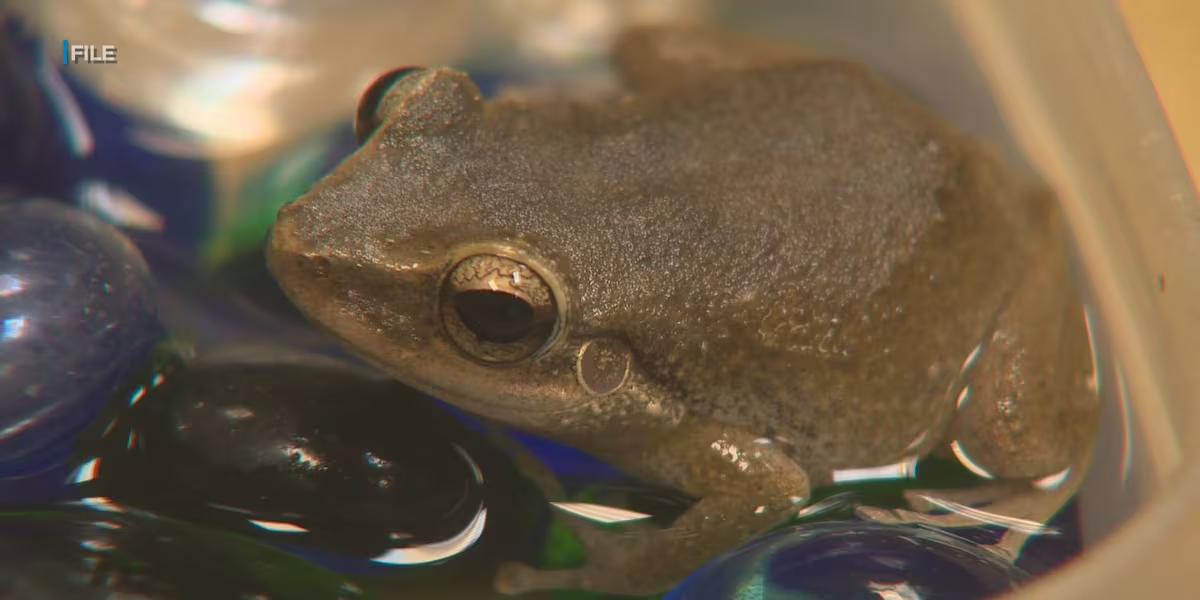
Palolo Valley residents push back against invasive coqui frog
HONOLULU (HawaiiNewsNow) – Palolo Valley residents are pushing back against the invasive coqui frog.
Read more UHERO: Rising rents keeping housing voucher program from helping more Hawaii families
During a community meeting Wednesday, residents teamed up with state invasive species crews to coordinate response efforts.
Residents say the piercing calls disrupt sleep, threaten native insects, and present public health risks through diseases such as rat lungworm, but state agencies are spread thin tackling other pests like little fire ants.
“Without the community, we’re so short-staffed and under capacity in terms of resources across the board that community assistance in these responses for coqui frog is crucial to any kind of containment,” said Nate Dube, manager of the Oahu Invasive Species Committee.
Sidney Lynch, co-chair of the volunteer group Palolo Coqui, lives about four blocks down from the epicenter on Waiomao Road and often called the Department of Agriculture and Biosecurity.
After noticing the frogs were becoming more numerous, neighbors decided they wanted to help. State biosecurity officials connected the neighborhood with the Oahu Invasive Species Committee and the Department of Land and Natural Resources, adopting a strategy modeled after a longstanding program in Waimanalo.
Adopting that framework, organizers created a WhatsApp network that now includes 117 volunteers to schedule weekly hunts and create coqui-free barriers by modifying landscapes the frogs like to breed in.
Palolo Coqui volunteers have caught about 7,000 of the invasive frogs across roughly 90 hunts since March.
Read more First Alert Forecast: Tracking “Norbert” and periods of heavy rain
Group leaders said they’re targeting male “calling frogs” on the perimeter ridgelines to keep the infestation from spreading over the mountain into neighboring valleys.
While state crews conduct periodic citric acid spray treatments, Lynch said agency capacity is limited and both groups need more boots on the ground.
“We’d like to see more increased capacity and also people, boots on the ground, hand capturing, because there is a chance to eradicate them here in Palolo,” Lynch said.
Dube said agencies hope to hire more staff, but explained they face hurdles securing sufficient funding and physical space to store, clean and decontaminate gear and equipment.
“If we want to put forward the effort that would lead to a successful containment or eradication response, we’re going to need to increase our resources vastly,” Dube said.
He added that while securing grant and budget support from state and federal agencies is increasingly difficult, public resources must be preserved and expanded.
“Rather than taking away funding from some of these agencies providing this crucial support to the community, we need to be able to increase that funding if at all possible and increase the resources across the board so that we can adequately respond to this invasion,” Dube said.
Read more Volunteers needed on Kauai as Red Cross shifts to long-term hurricane recovery





Post Comment