An inconspicuous pit unearthed by rail work was a link to old Honolulu
CHINATOWN (HawaiiNewsNow) – Thousands of people traverse Nimitz Highway daily. But many of them may be unaware of the historical remnants they’re passing that are buried just beneath the surface.
Read more First Alert Forecast:Trades slow down and a few more trade showers
Unfortunately, one of them is now just a memory of the past after recently being cemented over for an upcoming rail station.
Billy Seward is a Chinatown business owner and history enthusiast.
“I was driving to work and I just happened to be stuck in traffic in front of here and I took a look to my right hand side and I saw several people going through what they had dug out of this pit,” he said.
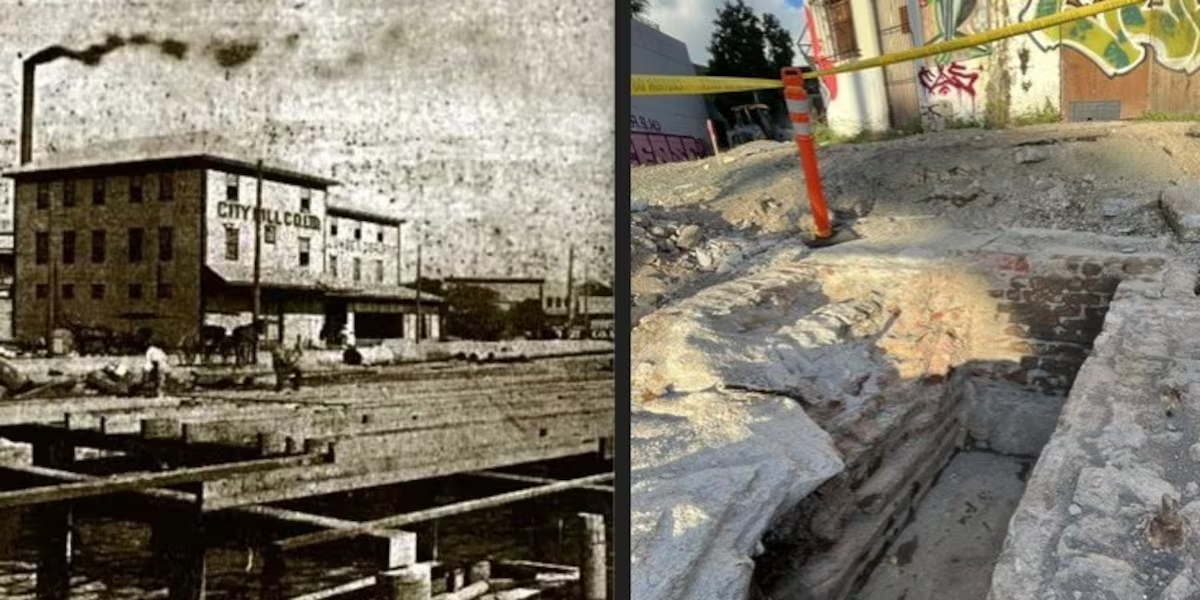
That pit, located at a lot along Kekaulike Street and Nimitz Highway, appeared inconspicuous at first. But upon closer inspection, it was a fascinating connection to the history of Chinatown merchants in the heart of Honolulu.
Seward described what he saw.
“It was a historic red brick structure that was buried. Not deep enough to be the bottom floor of a building, but about four feet deep at the base of it,” he said.
This discovery of this is a result of rail work moving closer to town. The Honolulu Authority for Rapid Transit said historical maps indicate that a wooden City Mill structure stood there around 1906.
Read more 3 years after Lahaina fire, condo owners search for money to rebuild
There was also a rectangular wheel pit, possibly for industrial use, that was later abandoned around 1927.
HART says all of this was documented in archaeological surveys in 2013.
But Seward believes the site dates back even further to the late 1800s when three Cantonese markets were there. He says it was likely destroyed in the 1886 fire, before being quickly rebuilt.
“I realized when I look around here, I was like man, this is the most historic place in Honolulu. It’s the corner of this river and the waterfront. That’s where everybody would have been coming to do business back in the 1800s,” Seward said.
As rail work forced the site to be filled in, HART said, “Archaeologists completed the mapping, measurements, photography, and other documentation required under the project’s archaeological monitoring plan and the State Historic Preservation Division subsequently authorized HART to remove the feature and continue station construction.”
Seward is sad to see this space reburied.
“All this stuff is disappearing right now. If you want to see it, now is the time to see it and document everything because it’s going to be gone,” he said. “Once it’s gone, it’s gone. You can’t bring it back.”
Read more Spotlight Now: U.S. Rep. Jill Tokuda, election chief Scott Nago



Post Comment