Maui battery storage project reaches milestone
KAHULUI (HawaiiNewsNow) – Hawaiian Electric’s battery energy storage project on Maui reached a new milestone.
Read more Hawaii receives $5M in federal funding for storm-damaged roads, bridges
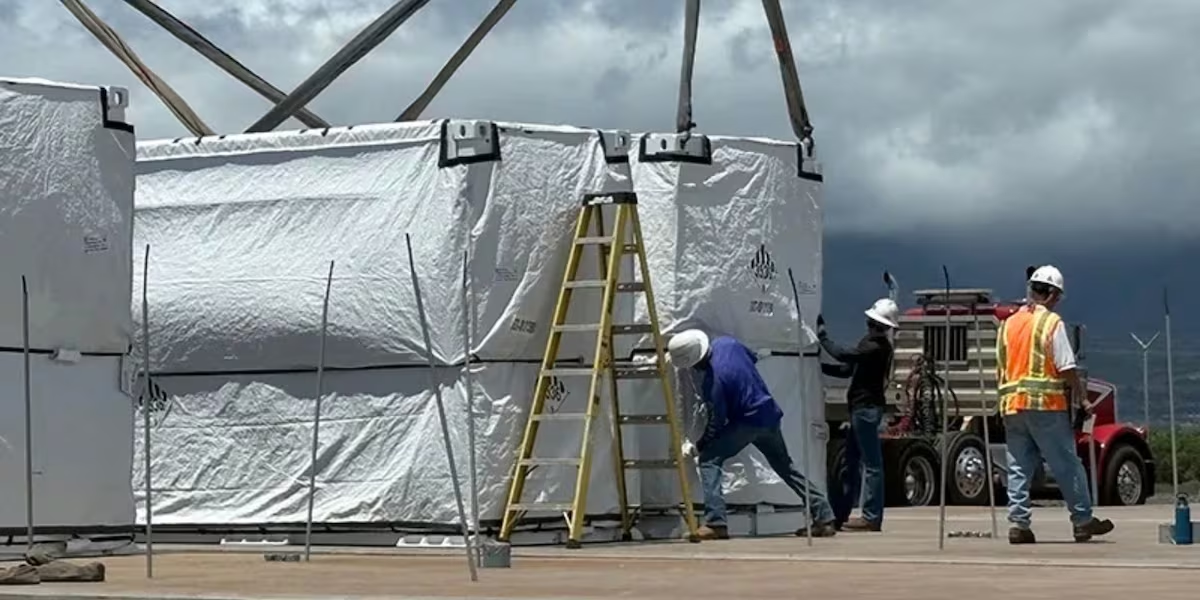
HECO’s Waena Battery Energy Storage System project’s first six Tesla Megapacks arrived and have been installed at the project site along Pūlehu Road in Central Maui.
The project will be the island’s first standalone load-shifting battery energy storage system, part of HECO’s commitment to transitioning to renewable energy.
When the project is complete, the system will be used during periods of increased energy demand.
The batteries, which are each about the size of a 40-foot shipping container, were delivered by semi-truck and lifted into place with a crane in late August.
The project was approved by the Public Utilities Commission in 2023.
This first battery storage project developed by Hawaiian Electric is part of the company’s goal to reduce carbon emissions and to use renewable resources to generate 100% of electricity by 2045.
About 41% of Maui County’s electricity comes from renewable sources, including more than 18,000 customer solar systems.
This new battery storage project will incorporate grid-forming technology, which can help maintain grid stability as the island uses more types of energy, like wind and solar.
Once in service, the battery system will store excess energy and deliver it back to the grid when needed.
The batteries do not generate electricity. They are used to store energy generated through solar and wind, which are typically abundant during daylight hours, to save power for nighttime.
“This project has been years in the making, and seeing the batteries arrive on site brings us one step closer to providing Maui with a more renewable electric grid,” said Shelley Takasato, manager of Generation Project Development for Hawaiian Electric.
Read more Kauai couple brings newborn home amid Hurricane Lowell recovery
The rest of the batteries will arrive in phases as construction continues.
The project is expected to enter service in 2027.





Post Comment