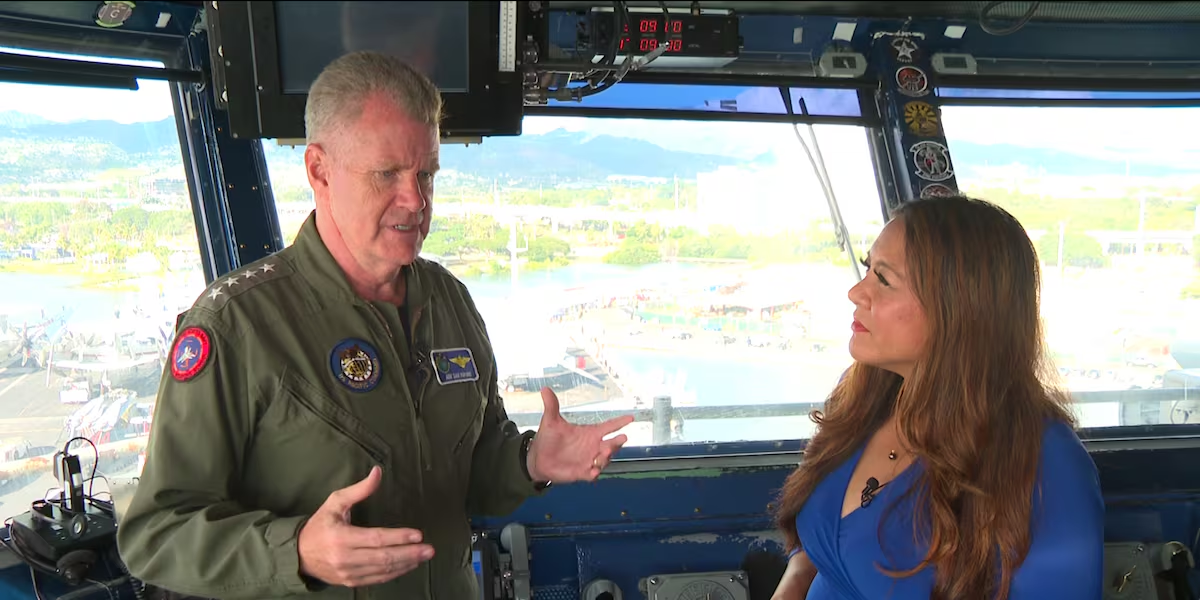
‘We got behind:’ PACOM chief Admiral Sam Paparo on need for new warships, missiles, defense systems
HONOLULU (HawaiiNewsNow) – Global defense observers say the Iran war has severely depleted America’s munitions stockpiles and tested its current defense systems, and it’s underscoring the need to modernize and build up infrastructure to keep up with missile and drone threats in the Pacific region.
Read more First Alert Forecast: Tropical Storm Lowell strengthening, expected to pass south of the state
Managing those threats is the responsibility of U.S. Pacific Command (PACOM), the largest, oldest combatant command that oversees U.S. military operations on over half the globe. Headquartered in Hawaii, PACOM encompasses 60% of the world’s population, 37 countries, and 70% of America’s armed forces.
As the U.S. manages competition from China and the ongoing war in Iran, PACOM commander Admiral Sam Paparo talked to Hawaii News Now’s Annalisa Burgos about the changing face of warfare and its cost.
“We live in a time of tremendous technological change, a changing epoch with information tools and cyber tools being one trend, the mass proliferation of unmanned systems, drones, of cheap plentiful precise precision strike capability, of deep penetrating strike capability all under the overall mega trend of the combination of proliferation in space of sensors and data, in space of data itself of compute, high powered compute, high speed compute, high capacity then application including artificial intelligence and then finally our own adoption of those tools and who learns best in that environment is who’s going to prevail in the 21st century,” Paparo said.
“At the end of the Cold War, the theory was we were living at the end of history and that ideology and nationalism were no longer the threats for conflict,” he added. “Today we’re living in the revenge of history where between China, Russia, North Korea, violent extremist groups in the Pacific area of responsibility and then Iran an active conflict boiling all over the world is that we didn’t cycle the threat environment and got behind. And now we have to get with it again, and that’s the traditional capabilities like shipping, like aircraft, like missile systems, newer capability our capability in space, capabilities in cyber drone dominance and strike weapons, and we’ve just got to transform the force according to the times.”
Read more Hawaiian Humane Society waives adoption fees through weekend
“While yes it’s expensive, so is life insurance, and I’ve wasted every penny of life insurance I’ve ever paid, and I’ll be paying my premium this month and relative to national GDP, it’s still low according to historical averages, but the number does show some sticker shock. But the cost of not could be so much more,” Paparo said.
When asked about the need to build more missiles, Paparo said it is a key part of our deterrence strategy with China.
“Deterrence is achieved by that ability to demonstrate capability and will, and it comes down to your ability to either impose costs on an adversary or including in response to aggression. And it’s also a big part of defending yourself against missiles and so China is building 800+ missiles per year,” Paparo explained. “And so the ability to defend that, the ability to impose costs, this gets back to the changing character of warfare with information operations, drone operations, and deep precision strike are much more salient instruments of national power than they’ve been in the past. And to be able to deter is to be able to demonstrate that the risk of armed conflict far outweighs the benefits and part of that is imposing costs and part of that is defending ourselves against those costs.”
“There are so many guided missile destroyers here in Pearl Harbor and a significant purpose for them is to be able to defend Hawaii and to defend Guam, the Marianas, our allies and partners from missile attack and from air attack. This is the crux of it.”
Read more Salvation Army feeds hundreds left without power after Hurricane Lala
Watch Annalisa’s full interview with PACOM commander Admiral Sam Paparo.





Post Comment