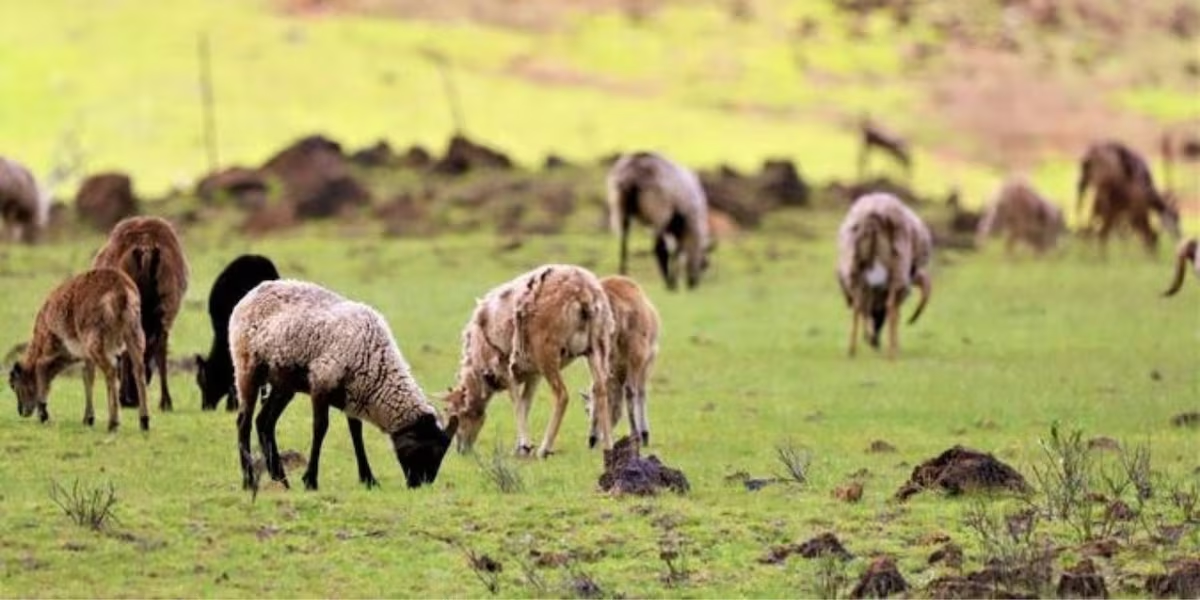
Invasive deer, goats are eating away Hawaii’s ranchlands, new study finds
HONOLULU (HawaiiNewsNow) – Invasive deer and goats are impacting ranches in the state, according to a new study from the University of Hawaii at Manoa.
Read more First Alert Forecast: Wet Weather Mid-Week
In the first study to measure the impact of wild grazing animals on Hawaii rangelands, scientists observed forage losses at two-thirds of the sites they surveyed.
The study, which was led by researchers from UH’s College of Tropical Agriculture and Human Resilience, found that axis deer were the clearest driver of decline across ranches on Hawaii Island and Maui.
The study’s authors say this is the first evidence that wild grazing is reducing the forage at many of Hawaii’s working cattle ranches.
Researchers found that 66% of the 35 sites surveyed showed forage loss.
“This is the first study to actually measure how much forage wild ungulates are removing from working ranchlands in Hawaii, and the losses are significant,” said Professor Melissa Price, corresponding author and researcher at CTAHR’s Department of Natural Resources and Environmental Management.
On Maui, axis deer were detected at 95% of surveyed sites, with about 47,000 deer ranging across a third of the island.
“Axis deer came out as the biggest driver of declining rangeland condition, which matches what ranchers have been telling us for years,” said CTAHR Extension Agent Mark Thorne, a study co-author and rangeland specialist.
Read more Live opossum captured at Honolulu Harbor
By using motion-triggered trail cameras alongside fenced exclusion plots, researchers were able to compare vegetation growth with and without grazers.
Sites dominated by axis deer produced about 24% less forage on average than the sites without deer.
Feral goats were found to have similar impacts on the land.
However, wild pigs and mouflon sheep were found to frequente higher-elevation areas than the deer and goats. Those areas tend to have faster forage production.
Several sites on Maui were impacted by the 2023 wildfires.
The study’s authors found that overgrazed rangelands took longer to recover after fire and stay vulnerable to fire-prone weeds, like fireweed, which was found at nearly 70% of sites.
“We’ve had to shrink our herds some years because there just isn’t enough grass left once the deer get to it,” said Greg Friel, a Maui island cattle rancher and co-author on the study. “It’s good to finally see numbers behind something ranching families here have been living with for a long time.”
The study was funded by the USDA Western SARE program and led by Lauren Katayama, who recently earned a master’s degree from NREM.
Read more What it takes to be the Aloha Festivals’ pau queen
The study was published in Rangeland Ecology & Management.




Post Comment