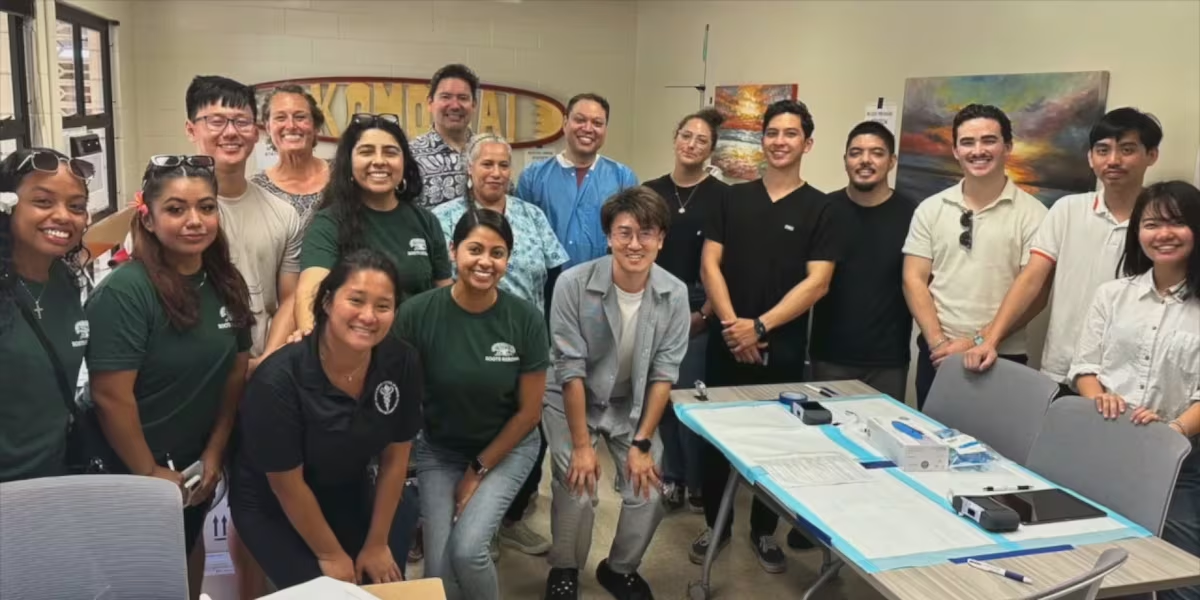
UH Manoa secures $5.9M NIH grant to expand Maui wildfire study
HONOLULU (HawaiiNewsNow) – The National Institutes of Health has awarded nearly $5.9 million to the University of Hawaii at Manoa to extend and expand the Maui Wildfire Exposure Study (MauiWES) through 2031.
Read more Hurricane Lowell ruined a part of Hanapepe. One family is working to fix it
The funding supports MauiWES, Hawaii’s largest disaster health cohort, which tracks survivor health following the August 2023 wildfires.
Administered by the National Institute on Minority Health and Health Disparities, the two grants will allow researchers to continue monitoring adult participants and expand the study to 800 children.
“We’re still seeing challenges with physical health, mental health, housing, and economic stability long after the disaster itself,” said Alika Maunakea, a professor at the John A. Burns School of Medicine and co-principal investigator of MauiWES. “So, following families over time allows us to understand which problems improve, which might persist and what actually helps people recover.”
Researchers say the expansion offers an unprecedented look at how major disasters affect development and long-term recovery across generations.
Read more ‘Throw them in the fire’: UH men’s basketball opens practice with 19 new faces
“Children are still developing, so what happens to them after the disaster might shape their health for decades,” Maunakea said. “We want to understand how wildfire exposure, displacement, stress, and changes at home can affect their lungs, mental health, development, and education.”
Study leaders plan to use the data to improve clinical care, health screenings, school support, and disaster response in Hawaii and nationwide.
“We want to understand why some people recover quickly while others continue to struggle years later,” said Ruben Juarez, UHERO–HMSA Distinguished Endowed Professor of Health Economics and co-principal investigator. “That means looking beyond the fire itself at health, housing, employment, environmental exposure, and social support together.”
The team emphasized that the research relies on the thousands of participating Maui residents, alongside support from local health care providers, community organizations, and island leaders.




Post Comment