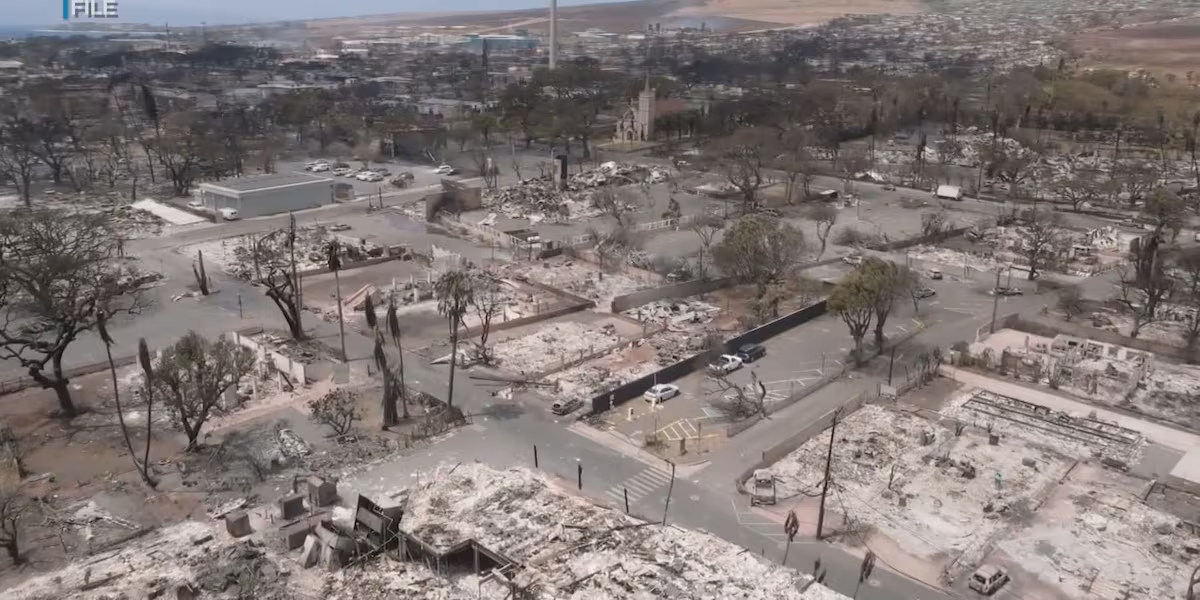
UHERO: Employment, poverty levels persist 3 years after Maui wildfires
HONOLULU (HawaiiNewsNow) – A new report from the University of Hawaii Economic Research Organization (UHERO) shows substantial progress is being made three years after the Maui wildfires, but significant gaps remain.
Read more UH football wide receivers step up with standout Ashlock sidelined
Emphasizing many of the findings detailed two weeks ago in the Maui Wildfire Exposure Study (Maui WES), the UHERO report shows housing stability is improving despite financial assistance dropping substantially.
“Unmet needs have come down a little over the past year, but so has assistance, and that drop has been quite substantial,” said lead researcher Daniela Bond-Smith.
Drop in aid
Financial assistance remains the highest reported need. As FEMA and other government aid slowed over the past 18 months, community organization assistance was cut in half compared to last year.
Most notably, about half of those affected by the fires received no assistance of any kind in May 2026, compared to a quarter last year.
While this may reflect some households regaining stability, the scale suggests assistance has fallen off for many who still need help.
Bond-Smith said alongside the ongoing need for financial assistance, survivors are struggling to navigate resources.
Housing improvements and displacement
About two-thirds of fire-affected households now live in permanent housing, up from just over half in early 2025. Homeownership has also grown 4% over the same period.
Despite these improvements, rates of unstable and temporary housing remain high.
The number of displaced households decreased in the past year, and fewer are now displaced from both their homes and West Maui. Of those displaced, one in six has returned to West Maui, though not to their original home.
Read more Mystery solved: Who owns the $350M superyacht spotted around Hawaii?
Looking at reconstruction efforts in Lahaina and West Maui, Bond-Smith said employment figures and the number of returning residents are likely to grow in the coming years.
“Seeing progress on the business side in West Maui, seeing job opportunities opening up, that will, I imagine, certainly be a pull factor that people consider coming back,” Bond-Smith said.
She also referred to the Maui WES study — which focused heavily on the mental health of survivors — noting that some residents may have needed more time to process the trauma before returning to West Maui.
Persistent employment struggles
However, employment and poverty levels are still areas where households continue to struggle.
The percentage of fire-affected people working full-time remained stagnant at 42%, well below the 62% reported before the fires. While unemployment dropped from 10% to 8%, exits from the labor market rose from 26% to 30%.
Bond-Smith said exits could be due to retirement or because residents are no longer seeking work.
“A really pertinent question is to sort of think about what that means in terms of support that people may need to reconnect with the labor market,” Bond-Smith said. “Those jobs that fell away in West Maui don’t necessarily appear elsewhere.”
Most affected households are still earning less than they did before the fires.
UHERO plans to continue monitoring progress in West Maui as recovery enters its fourth year.
Read more Hawaii Island wildfire burns over 70 acres, keeps Daniel K. Inouye Highway closed





Post Comment