Hawaii lawmakers join national conversation on ways to fill federal funding gaps
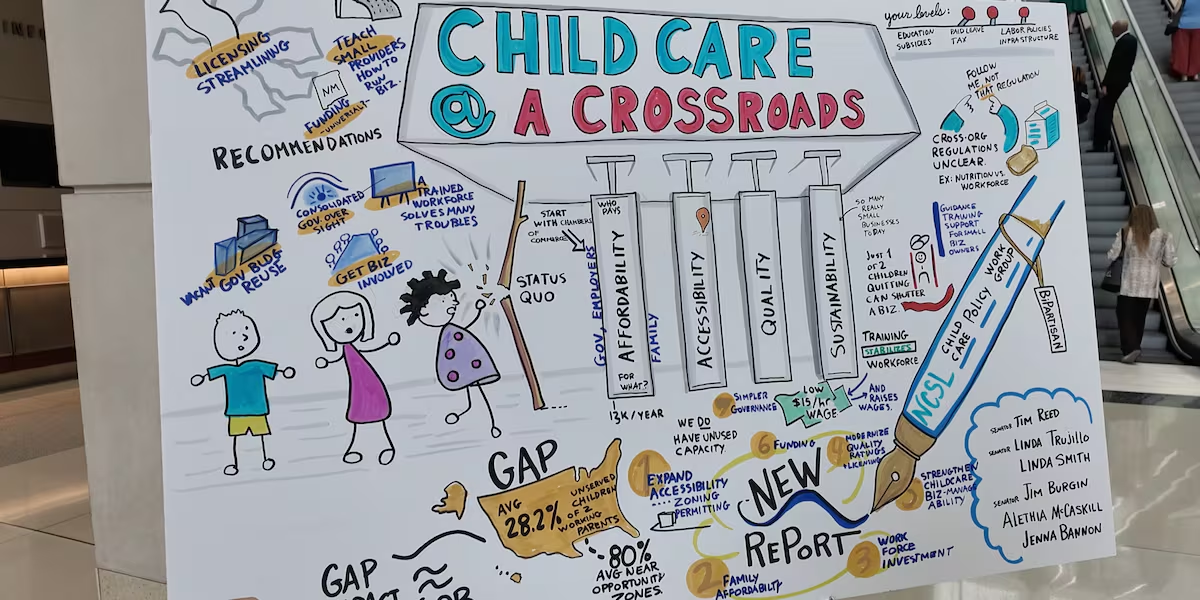
HONOLULU (HawaiiNewsNow) – Hawaii lawmakers came back from this year’s National Conference of State Legislatures with fresh perspectives on how to spur economic growth despite federal cuts.
Read more Sun Noodle recalls product sold in Hawaii
With less money coming from Washington, leaders from across the country compared playbooks on how to make smart budget decisions, including what to cut, what to save and who pays for it.
“The states are really the place where innovation happens, where problems are solved,” said NCSL CEO Tim Storey. “The federal government in Washington are in some ways just at a very low point right now, partly because of politics and the inability for them to work together to solve problems so problems are getting solved in the states in bipartisan ways.”
That includes new approaches to filling funding gaps, especially in healthcare and agriculture, whether it’s through new technology or revenue sources.
“As farmers start to pull out and say, ‘I’m done, I can no longer farm,’ is AI warranted for that?” said state Sen. Lynn DeCoite. “How do we incorporate AI? How do we incorporate technology? How do we mechanize, whether it be a tractor that is GPS-operated, so that these farmers can continue to stay in business?”
Now with the federal government looking to allow prediction markets nationally, gambling as a revenue generator could be on the table.
“The national conversation has really shifted, especially on gambling and sports betting, from ‘should we allow it’ to now, ‘what are we going to do about these prediction markets on a state level,’” said state Rep. Scot Matayoshi. “And what can we do to mitigate some of the damages that these prediction markets are doing to our citizens?”
Read more 81st anniversary of Hiroshima bombing observed with peace ceremony in Honolulu
“Let the people decide. Is this what you want, or do we continue to tax? At the end of the day, that’s the bottom line: you find another solution or the taxes will go up,” DeCoite said.
Meantime, Hawaii delegates who serve on federal policy committees — from education to natural resources — are prioritizing issues faced with limited resources.
“We’re really looking at the federal funding mechanisms, coming to consensus on ways to improve funding, for example, for special education, or for young people who are experiencing homelessness,” said state Rep. Amy Perusso.
Lawmakers say the bigger issue comes down to structure, not partisan politics.
“We’re all being impacted,” said Senate President Ron Kouchi. “And federalism really discusses the founding principle of the United States government: that the states had certain rights, and that the federal government, in the agreement, took over certain responsibilities. Right now the federal government is not living up to its end.”
Regardless of who wins in this weekend’s primary election, delegates say the fight to find funding will continue into the next legislative session.
Read more Hawaii’s One Ohana Fund offers all $175M to Maui wildfire victims





Post Comment