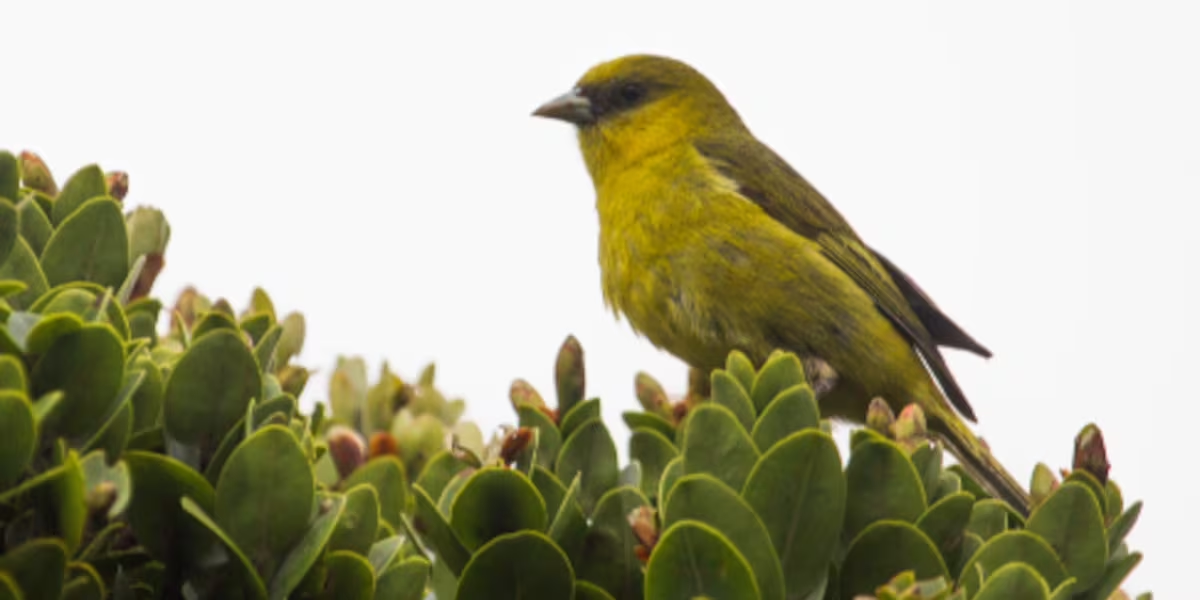
Scientists trace DNA, evolutionary history of Hawaii’s endangered honeycreepers
HONOLULU (HawaiiNewsNow) – A new Smithsonian study has identified the genetic relationship among Hawaii’s honeycreeper species.
Read more WWE returning to Hawaii for first time in seven years
Scientists at the Smithsonian’s National Zoo and Conservation Biology Institute (NZCBI) said there was a “big bang” moment when the species rapidly diversified, and their findings were published Monday in the Proceedings of the National Academy of Sciences.
According to the study, there were once more than 60 species of Honeycreepers in Hawaii that evolved from a single ancestor about 3 million years ago while the island of Oahu was first forming.
Then, researchers said the birds evolved in a relatively small time window and rapidly diversified from one species into many new ones.
By the time Europeans arrived in 1778, there were about 35 species still alive. Now, only 17 species remain, with many under threat of extinction due to introduced diseases, invasive predators and climate change.
Read more New Kauai carpentry program prepares inmates for jobs after release
NZCBI scientists mapped the birds’ DNA by testing tiny bits of epidermis from old museum specimens in the U.S. and Europe, and even old fossil bones.
The new data will help experts understand how some honeycreepers survived the many challenges.
“The birds are getting rare and they’re trying to hybridize, not artificially but as a basically as a strategy to cope with there just not being mating opportunities. That impacts what they’re going to look like different and that impacts how we conserve them,” said Michael Campana, supervisory research biologist, NZCBI.
As the research team looks ahead, they will look into how the birds evolved as a result of diseases, including avipoxvirus and avian malaria.
Read more HPD officer first in Hawaii to win national ‘Hometown Hero’ award







Post Comment