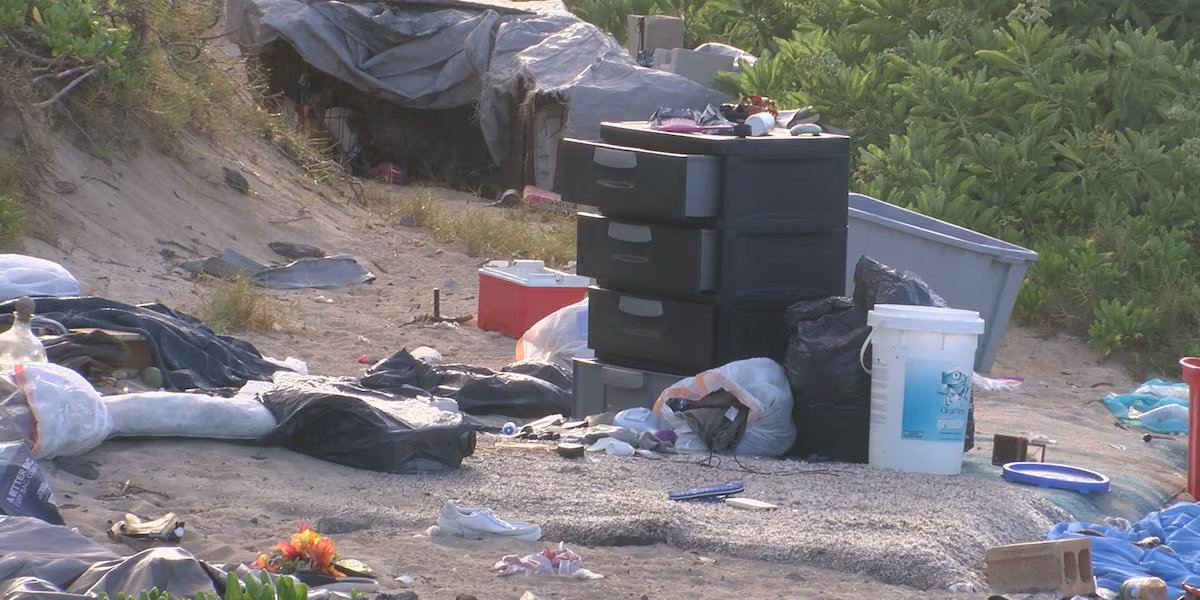
Trash at East Oahu beach highlights community’s homeless problem
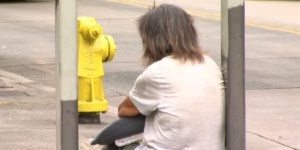
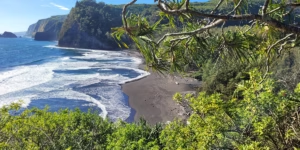
HONOLULU (HawaiiNewsNow) – Waimanalo native Vincent Iona has been living in a tent along Kaupo Beach Park, also known as “Baby Makapuu,” for about a decade.
Read more Phased closure of Waianae homeless village moves forward as residents relocate
To keep the area clean, Iona typically ends his day by raking the parking lot.
“I clean in the evenings, cause not as hot,” Iona explained.
Besides his own routine, Iona reminds others who live at the park to take care of the public space.
“Put the rubbish where the rubbish belongs, in the trash,” Iona said.
Last September, the city hauled away five tons of trash at the park.
Nearly a year later, some beachgoers claim there has been rubbish sitting on the shoreline for months.
A video posted on Instagram showing the abandoned belongings, prompted some to comment that they are avoiding the area.
Iona responded to the criticism, saying, “You guys come and take pictures of us, and you guys take only the messy part, and not of what we cleaning and what we doing.”
An effort to help is unfolding about two miles down the road at homeless program Hui Mahi’ai ‘Aina.
“I would love to have everybody home,” organization CEO Blanche McMillan said. “Once I bring them home, they’ll be my family and I will always cherish them, and I will always care for them.”
The group plans to move its community and add 116 new units, enough to house the current campers at “Baby Maks.”
Last month, we reported on resistance from community members to the expansion.
“We are not ready for all these people coming from around the state,” site neighbor Cindy Parker said in our previous coverage.
Others along ‘Olu’olu Street Street said after the Kona Low storms flooded the neighborhood, they are worried a retaining wall Hui Mahiai Aina built before the flood could cause harm during the next heavy rain.
“The impact on my property. I could see it. I know how far this wall goes and it’s impacted everybody else on ‘Olu’Olu Street,” neighbor Bernard Sampanga said.
Read more Made in Hawaii Festival to celebrate 32 years with 800+ vendors
Dexter Kubota, a civil engineer for the kauhale project, said during last week’s Waimanalo neighborhood board meeting that they are working on mitigation efforts.
“We are looking at putting a drain line that’s through the wall to address that particular concern. We are listening to the community, we are not done with the project yet,” Kubota said.
Until the project is complete and Iona has that option to leave Baby Makapuu, he promised to continue cleaning the area.
“Sometimes I do em by myself. If that’s what it takes, it’s what we gotta do, I gotta do,” Iona said.
The state told Hawaii News Now human services personnel frequently visit the area to offer help, and that they were there last week, and are set to return sometime this week.
In an email, a city spokesperson provided Hawaii News Now the following statement:
We are aware of the video circulating on social media. In September 2025, the City conducted a large Stored Property Ordinance (SPO) enforcement at this location that resulted in the removal of nearly 5 tons of trash, and the issuance of 17 removal notices. Since then, we have continued to assess conditions and work with the community on potential long-term solutions. This particular shoreline, like many beach parks around the island, includes terrain that is difficult to access, limiting the frequency of our enforcement and cleanup efforts.
While the park itself does not currently have closure hours, the parking lot is closed nightly from 10 p.m. to 7 a.m. Previous efforts to secure the parking lot with gates and locks were unsuccessful due to repeated vandalism. The City has been in discussions with the surrounding community about the possibility of establishing park closure hours for the entire park.
At this time, it is difficult to determine whether the shoreline debris is the result of unauthorized encampments or irresponsible park users. Beach parks typically experience significantly higher use during the summer months, which can contribute to increased litter. Regardless of the source, everyone has a responsibility to mālama ʻāina by caring for our parks and shorelines.
The City remains committed to engaging individuals experiencing houselessness and connecting them with outreach, shelter, housing, behavioral health services, and other supportive resources through coordinated efforts with community partners and government agencies. At the same time, the City will continue working to keep our parks clean, safe, and accessible for everyone.



Post Comment