Early halalu, oama season draws fishers to Oahu’s shoreline
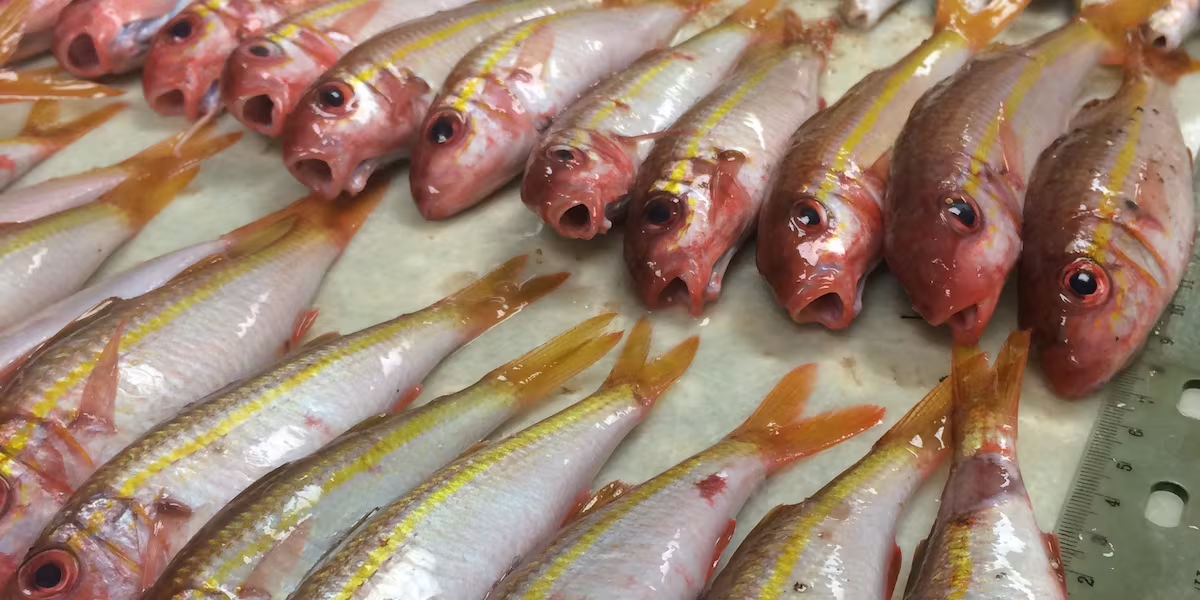
HONOLULU (HawaiiNewsNow) – Big crowds, silver flashes in the water, and shouts of “hana paʻa” are all signs the summer halalu and oama season is well underway.
Read more Auditions underway for play inspired by Hawaii’s Okinawan community
Fishers along Oʻahu’s shoreline have been tracking large schools, known as bait balls, and say the action started earlier than usual.
“This pile is pretty big at Ala Moana and then in the next couple months, all the schools are going be coming in,” said fisherman Dean Uwaine.
Others say they’re there for the table as much as the catch.
“I fry mine in Hawaiian salt and pepper,” said fisherman George Dezafra.
Halalu — baby akule, also known as big-eyed scad — and oama — baby weke or goatfish — typically come close to shore in the summer as they try to avoid larger predators.
The fish usually show up around July or August, but several local fishers said they started seeing them as early as May.
“Lantern ceremony is when they seen the pile and that’s when people started coming down,” said fisherman Keith Matsunaga. “It’s not every year that they come in Ala Moana. They might come in Kakaako side, Kewalos, even right now they had a big pile before the seal gave birth at Kaimana.”
How long the schools stay can depend on conditions in the water, including habitat, food availability and currents, marine biologists said.
“They’re likely spawning year round, but there’s definitely an increase in activity during the spring and that’s why we see so many during the summer,” said marine biologist Keith Kamikawa.
Read more Native Hawaiian Convention returns to Honolulu with workshops, marketplace
Kamikawa also pointed to past seasons as an example of how active it can get.
“In 2014 or 2015, we had a really massive bait season — the best it was, people said, in 20 or 30 years,” Kamikawa said. “Oama were pushed up in canals. They were in the Ala Wai. Barracuda and papio were coming in and whacking the oama school.”
Kamikawa said this being an El Niño year could mean warmer waters and a longer season, though stormier weather could also move the schools away.
“There might be offshore storms or currents that maybe push them in a different place. September is when we see a slow down usually. We’re going to have some good years; we’re going to have some bad years,” Kamikawa said.
And for many fishers, word of where the fish are running is still passed the old-fashioned way.
“Fishing friends right, that’s what it is,” Matsunaga said. “Word gets out slowly by slowly. So if there’s a school there and they’re biting, I going be calling some of these guys.”
“Every summer they’re here, then they go away and come back the next summer,” Dezafra said.
Read more Case says shipping interests ‘out to get me’ by funding Keohokalole



Post Comment